How far through its life is your reptile?
Reptile lifespans run from a few years to more than a century; by our estimate Jonathan the tortoise is about 194 years[1] old in 2026. Enter your reptile's age to see its life stage and typical life expectancy.
- Life stage for turtles, snakes and lizards
- Typical captive lifespans with sources
- A gentle prompt on when to plan ahead
Pet age & senior years calculator
Choose your pet and their age to see a human-years comparison and which life stage they're in.
In human years
about 48
Scaled to an 80-year human life. A rough comparison only.
Life stage
Adult
Typical life expectancy: about 5–10 years in captivity.
In the prime years. Regular check-ups are all the planning most families need right now.
Source: Merck Veterinary Manual - Table: Average Life Span of Reptiles in Captivity. Every animal is an individual; breed, size and care all make a difference
Next step: Know your options ahead of time →
Using it
Choose the species, enter the age
The calculator opens on a bearded dragon aged 4.5. In the Your pet menu, the Reptiles group lists bearded dragon, ball python, leopard gecko and box turtle; pick your reptile's species, or the closest match, and enter its Age in years (half years are fine). If you bought it as an adult and don't know its hatch date, add your rough guess at its age when you got it to the years you've had it; a vet can often give a rough age from size, shell growth rings or bone condition.
The tool shows a life stage (young, adult, senior or geriatric), the typical life expectancy for that species in captivity with its source, and a rough "in human years" figure. Treat that last figure lightly: there's no validated formula for converting reptile years, so it simply scales your pet's age against the middle of its species' typical captive lifespan and maps that onto an 80-year human life. Senior starts at about three-quarters of that midpoint and geriatric at the midpoint itself.
The data
Typical captive lifespans the calculator uses
box turtle 25-50 yr[2]
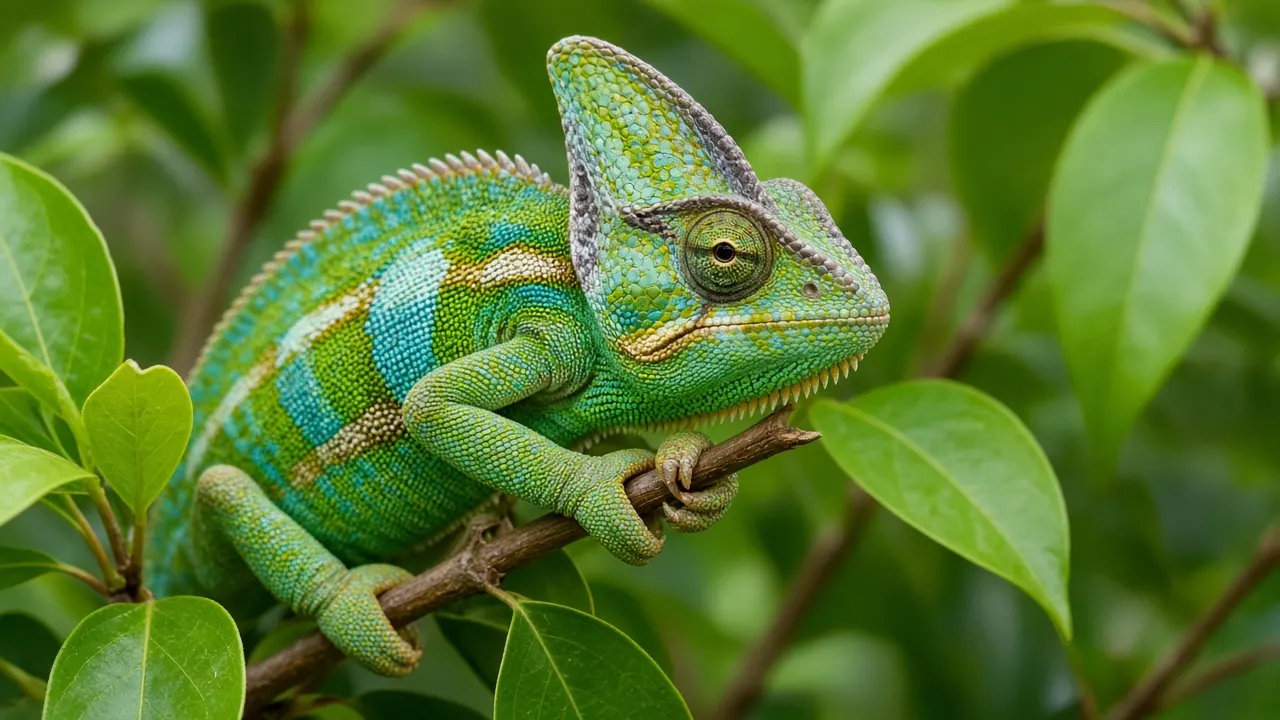
Some species are far shorter-lived. Old World chameleons usually manage only 3-8 years[3] in captivity, which is why chameleon keepers often face a goodbye sooner than they expect. At the other extreme, the tortoise record before Jonathan was Tu'i Malila in Tonga, at least 188 years[4]. The reference for all of these is the Merck Veterinary Manual's captive lifespan table.
Early life is riskier than many people fear, but less than some claims suggest. A peer-reviewed University of Kent survey found 3.6%[5] of pet snakes, chelonians and lizards died within a year of being acquired, with boas and pythons lowest and chameleons highest. A much larger figure often quoted by an advocacy group isn't supported by that study.
Example
Worked example: a 9-year-old bearded dragon
A bearded dragon typically lives 5 to 10 years in captivity, though well-kept dragons sometimes reach their early teens. The calculator takes the middle of that range, 7.5 years, as its reference point, so at 9 it puts your dragon in the geriatric stage and shows about 96 in human years. It would have turned senior at about five and a half. That doesn't mean anything is wrong. It means it's a good time for a vet check and, quietly, for a plan.
Compare a 9-year-old leopard gecko: with a typical lifespan of 20 years or more, it's a mature adult with a long way to go. And a 9-year-old box turtle, at about 19 in human years, is barely out of its youth. The same number of years means very different things across reptiles.
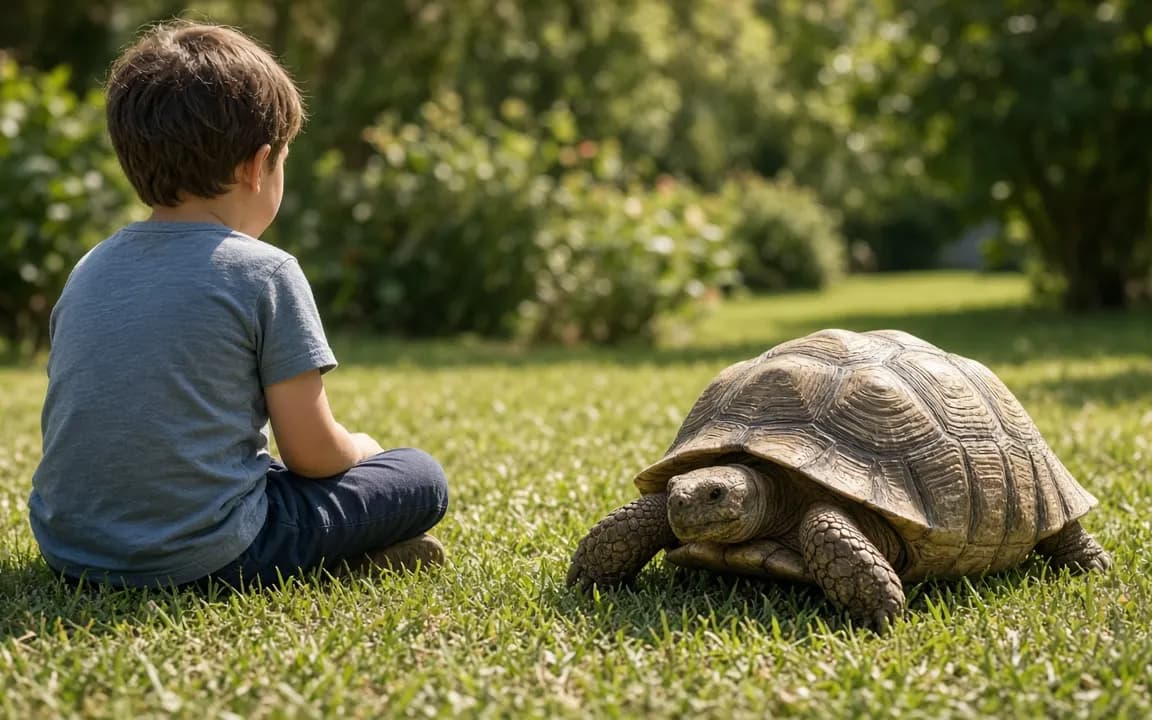
If you keep a long-lived tortoise, is there a plan for them if they outlive you?
Tap an answer to vote and see how others answered. Anonymous.
Getting older
Signs a reptile is entering its senior years
- Slower growth and fewer sheds. Adult reptiles shed less often, and older ones may shed unevenly.
- Weight loss despite eating, or a gradual drop in appetite outside of normal seasonal changes.
- Stiffness or reluctance to climb, especially in lizards that used to bask high up.
- Cloudy eyes or slower tongue-flicking in snakes and monitors.
- Longer, deeper rest periods. These can look like brumation, so check with your vet before assuming either.
Regular weigh-ins are the most useful habit. A steady decline is often the first sign of illness in reptiles, which hide weakness well. Our page on quality of life and saying goodbye to a reptile covers how vets and keepers judge when treatment stops helping.
Planning ahead
When your reptile may outlive you
For box turtles, many tortoises and some large snakes, the realistic question isn't when to plan aftercare but who will care for them next. Name a person in your will (see what happens if your tortoise outlives you), check they're willing, and leave written care notes: diet, temperatures, brumation routine, vet contact and any permits. Our guide to pre-planning reptile aftercare has a simple checklist.
For shorter-lived species, planning means deciding in calm moments what you'd want: private or communal cremation, burial, or a keepsake like a framed shed. The aftercare options comparison and memorial budget planner make that easier to think through.
Honest limits
What the age calculator can't tell you
Lifespan figures are averages. Husbandry, diet, UV lighting, genetics and luck all push individual reptiles well above or below them. The calculator can't assess your reptile's health, and a 'senior' label is not a prognosis. If you're worried, a reptile vet is the right next step. If you're ready to look at options without pressure, tell us about your reptile.
Nor can it tell you whether a quiet, still reptile has died or is simply cold or brumating. Older reptiles rest longer and deeper, and in winter the two can be hard to tell apart. If you're unsure, keep your reptile at its normal temperatures and ask a vet; our reptile aftercare overview explains why confirming first matters so much. Our article on telling death from brumation explains the checks.

Reader polls
What would you choose?
Vote anonymously and see how other readers answered. The results are live counts from people who visit this site, so they show real opinions, not a scientific sample.
If you keep a long-lived tortoise, is there a plan for them if they outlive you?
Tap an answer to vote and see how others answered. Anonymous.
Which reptile are you planning aftercare for?
Tap an answer to vote and see how others answered. Anonymous.
Would you pre-pay for aftercare while your pet is still healthy?
Tap an answer to vote and see how others answered. Anonymous.

Free tools to help you plan

Pet age & senior years calculator
Convert your pet's age and see when senior-care and planning conversations usually start.

Aftercare options compared
Compare private, communal and water cremation with burial on cost, timing and what comes home.

Memorial budget planner
Add up cremation, urn, keepsakes and a farewell so the total holds no surprises.
Questions people ask
How long do pet tortoises live?
It depends a great deal on the species. Many small Mediterranean tortoises live 40 to 60 years or more, leopard tortoises 50 or more, and giant tortoises can pass 100. Box turtles typically live 25 to 50 years. Many will outlive the person who first bought them.
How old is a senior bearded dragon?
Typical captive lifespans are 5 to 10 years, so the calculator marks bearded dragons senior from about five and a half and geriatric from seven and a half. Many keepers and vets think of them as seniors from around 7 or 8. Well-cared-for dragons sometimes live longer. Watch for weight loss, less basking and slower movement, and book a vet check if you notice them.
Can a vet tell how old my reptile is?
Only roughly. Vets estimate age from size, body condition, shell growth rings in chelonians and signs of wear, but reptiles keep growing slowly for years, so estimates can be wide. For a rescued or adopted adult, try the calculator with a low and a high age rather than a single number.
Why does the calculator show a human-equivalent age?
Many people find it a helpful way to picture life stage. For reptiles it's only a rough comparison, because no validated conversion exists. The life stage and typical lifespan figures are more useful for planning than the human-equivalent number.


Sources and our estimates
- [1] If Jonathan the tortoise hatched in 1832, he is about 194 years old in 2026. Our estimate: 2026 - 1832. How we calculate.
- [2] Average captive lifespans: ball python 15-20 years, boa constrictor 15-25, corn snake 10-15, bearded dragon 5-10, green iguana 5-15, leopard gecko 20+, eastern box turtle 25-50, leopard tortoise 50+. Merck Veterinary Manual - Table: Average Life Span of Reptiles in Captivity.
- [3] Old World chameleons live only about 3-8 years in captivity and green anoles 4-8 years. Merck Veterinary Manual - Table: Average Life Span of Reptiles in Captivity.
- [4] The previous record tortoise, Tu'i Malila, a radiated tortoise in Tonga, lived to at least 188 years before dying in 1965. Guinness World Records - 190-year-old Jonathan becomes world's oldest tortoise ever (Jan 2022), 1965.
- [5] A University of Kent survey found only 3.6% of pet snakes, chelonians and lizards died within one year of acquisition; boas and pythons had the lowest mortality (1.9%) and chameleons the highest (28.2%). Robinson JE, St John FA, Griffiths RA, Roberts DL. Captive Reptile Mortality Rates in the Home and Implications for the Wildlife Trade. PLoS One, 2015 (PMID 26556237), 2015.
Planning ahead for an older reptile?
Tell us what you need and where you are. We'll reply by email with clear options and prices so you can decide in your own time.