Every reptile aftercare option, sized to the animal you actually have
Turtles and tortoises make up 43%[1] of US reptile-keeping households, and each one raises a shell question a dog never does. Here's what we can help you arrange, with honest price ranges.
- Options for anything from a crested gecko to a giant tortoise
- Shell, shed and post-mortem choices explained before collection
- Providers who have handled your species, found for you
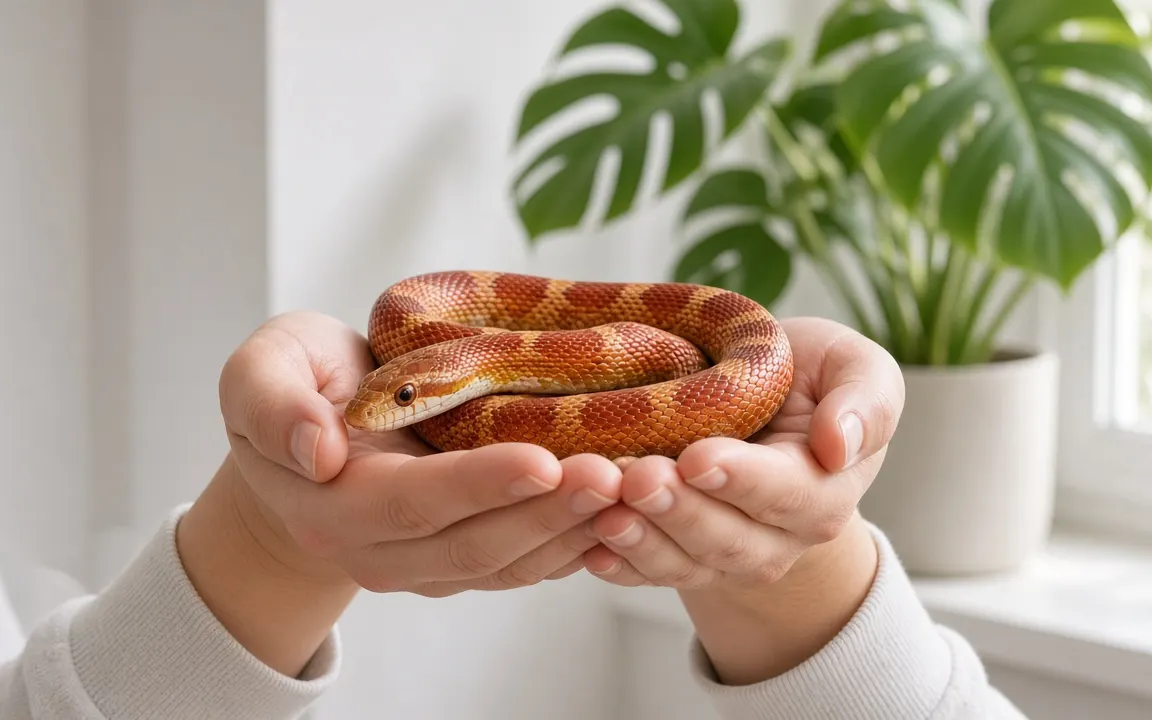
Geckos, dragons, anoles, skinks
Private cremation for small lizards, with nothing lost
The difficulty with a leopard gecko, crested gecko or young bearded dragon isn't the cremation itself. It's making sure a few grams of ash are gathered and returned without mixing. Good providers place very small pets on their own tray or in a small ceramic dish inside the chamber, then sweep and sieve them separately.
Price barely tracks size at this end. PetMD's US figures start at communal $50+; private $100+[2], and a minimum fee usually applies whether your lizard weighs 40 g or 4 kg. What you're really paying for is careful handling and a return container. A tiny glass vial, locket or keepsake urn often suits the amount better than a standard urn.
Corn snakes to reticulated pythons
Snake cremation, where length matters as much as weight
Most pet snakes (corn snakes, kingsnakes, ball pythons, hognoses) weigh a few pounds at most and are straightforward for any pet crematory. Loosely coiled in a padded box, they travel and cremate much like a small cat. Tell the provider the species and weight and you'll usually get a small-pet price.
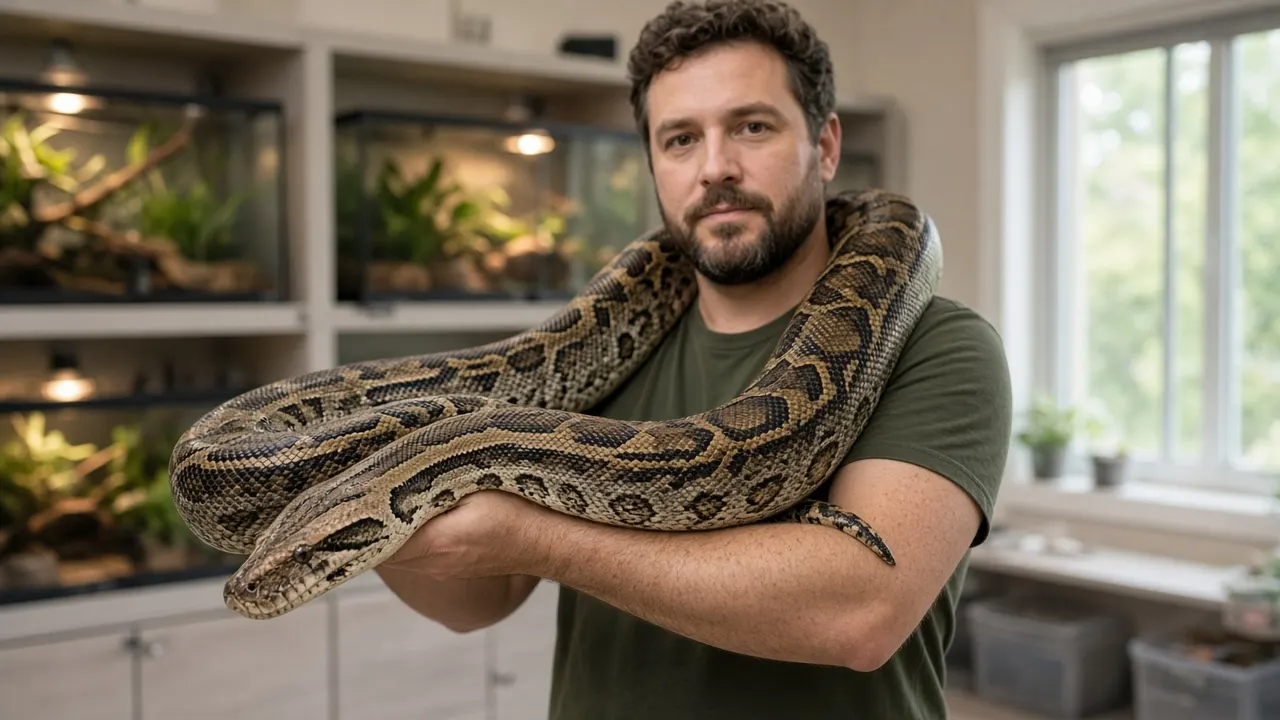
Large boas, Burmese pythons and reticulated pythons are a different job. A 14-foot python can weigh well over 100 lb and must be coiled into a container that fits the chamber door. Some crematories can't take it; others can if you warn them. Give length, weight and girth on the first call, and ask whether they provide a container or you need to. Our page on transport and logistics when a reptile passes covers moving a big snake safely.
If your snake is venomous, say so at the very start, even if it has died. The venom and bite reflex remain a risk to staff. Our guide to species and venomous disclosure explains what to tell a provider and why.
Tortoises, box turtles, sliders
Tortoises and turtles: cremation, keeping the shell, or both
A turtle or tortoise shell is part of the skeleton, fused to the spine and ribs. That leaves you three routes, and you need to choose one before collection:
- Full cremation. The shell is cremated with the body. Expect a bit more ash than a lizard of similar weight, and sometimes a few larger bone fragments that the provider will process down.
- Shell retention. A preservation specialist cleans the shell and returns it whole; the rest of the body can be cremated or buried separately. This takes weeks to months and costs extra.
- Burial with the shell intact. A natural choice for a garden tortoise, as long as local rules allow and the grave is deep enough.

Big tortoises (sulcatas, leopards, Aldabras) are priced like large dogs because of weight and handling. Our shell and scale retention guide explains who does shell work and what to ask them.
Iguanas, monitors, tegus
Large lizards that need a two-person lift
An adult green iguana can reach six feet including the tail; a water monitor or Argentine tegu can be heavier than it looks. They fit in a standard chamber, but the tail and claws make packaging awkward. A long, padded box or a sturdy tote with a blanket works, with the tail curved gently alongside the body.
Price usually falls in the middle weight bands, somewhere between a cat and a medium dog. If you're unsure where yours will land, the cremation cost calculator gives a range from the weight you enter.

Free tool
Cremation cost calculator
Estimate a realistic price range for your pet's size, location and the type of cremation.
Lower cost or lower impact
Communal cremation and water cremation for reptiles
In a communal cremation your reptile is cremated with other animals and no ashes come back. It's a sensible choice for a very small lizard when you don't need anything returned, and it's much cheaper: UK regulators found communal runs 2x to 5x cheaper[3] than individual cremation for the same weight. The trade-offs are covered in private vs communal cremation for reptiles.
Water cremation (aquamation, or alkaline hydrolysis) uses warm water and alkali instead of flame. It's gentle on bone, so it tends to return slightly more remains, and a pet cycle uses about as much water as 1–3 pet baths[4]. It isn't available everywhere yet.
Water cremation keeps the same price gap between shared and individual: at one provider we looked at, private aquamation cost about 2.5 times the communal version, by our estimate.[5] Availability is patchier than flame cremation. The Cremation Association of North America's page on alkaline hydrolysis explains the process and notes that pet crematories have adopted it more widely than human funeral homes.
communal $30-200; private $100-500+[6]
Had you heard of water cremation (aquamation) before today?
Tap an answer to vote and see how others answered. Anonymous.
For collections
A post-mortem before cremation, when other reptiles are at risk
If you keep several snakes or lizards and one dies suddenly, a necropsy can show whether the cause might spread through the rest. It must happen first, since nothing can be tested after cremation. Keep the body refrigerated, not frozen, and call your reptile vet the same day. The Merck Veterinary Manual's reptile chapters describe many of the infectious diseases a reptile post-mortem looks for.
Many vets can arrange cremation afterwards, so the two don't have to be separate trips. Ask whether the body will come back to you, or go straight to the crematory, before you sign anything.
Alternatives and extras
Home burial, sheds and preservation for the keeper who wants something to hold
Home burial suits many small reptiles. Choose a spot away from vegetable beds and water, dig deep enough that foxes or dogs won't disturb it, and check local rules first. If you're thinking of mixing ashes into a planter instead, remember cremated remains are very alkaline (a pH of ~11.7[7]) and need a soil amendment before plants will thrive. The cremation vs burial guide weighs the two up.
For keepsakes, a framed shed skin, a turtle scute in a locket or a clay print of a tortoise's front foot are all things we can point you to makers for. Some families of very small lizards choose freeze-dry preservation instead; one US studio charges USD 650[8] for a pet under a pound, with a wait of several months.
Side by side
Comparing reptile aftercare options at a glance
| Option | Who it suits | Typical US range |
|---|---|---|
| Private cremation, small reptile | Geckos, dragons, most snakes | About $100 to $175 |
| Private cremation, giant reptile | Big tortoises, pythons, monitors over 90 lb | About $350 to $450 |
| Communal cremation | Any size, when no ashes are needed | About $45 to $75 for small pets |
| Water cremation | Keepers wanting a lower-carbon option | About $80 to $450 |
| Shell retention | Tortoises and turtles | Quoted by specialist |
| Home burial | Small reptiles, owned property | Your time, plus a container |
The small and giant private bands come from CareCredit's weight-based US guide; ask any provider for a written total, since collection and urns are usually extra. Still unsure? The aftercare options comparison ranks these choices by what matters most to you. Prices and burial rules shift from region to region, and our local pages show what's typical where you live.

Free tool
Aftercare options compared
Compare private, communal and water cremation with burial on cost, timing and what comes home.
Have you ever kept a shed skin, scute or photo of your reptile's markings as a keepsake?
Tap an answer to vote and see how others answered. Anonymous.

Reader polls
What would you choose?
Vote anonymously and see how other readers answered. The results are live counts from people who visit this site, so they show real opinions, not a scientific sample.
Have you ever kept a shed skin, scute or photo of your reptile's markings as a keepsake?
Tap an answer to vote and see how others answered. Anonymous.
If your tortoise or turtle died, what would you want done with the shell?
Tap an answer to vote and see how others answered. Anonymous.
Had you heard of water cremation (aquamation) before today?
Tap an answer to vote and see how others answered. Anonymous.

Free tools to help you plan
Aftercare options compared
Compare private, communal and water cremation with burial on cost, timing and what comes home.
Cremation cost calculator
Estimate a realistic price range for your pet's size, location and the type of cremation.

Urn size calculator
Find the urn volume you need from your pet's weight, plus keepsake and sharing options.
Questions people ask
Do I have to tell the crematory if my snake was venomous?
Yes, always. Venom stays active after death and the bite reflex can still work for a time, so staff need to know how to handle the head safely. Give the species name, not just 'snake', when you first call, and mention it again on any paperwork.
Can a crematory keep my tortoise's shell for me?
Usually not directly. Crematories cremate; cleaning and preserving a shell is specialist work done by preparators or taxidermists. If you want the shell, arrange that first, then send the rest of the body for cremation or burial. Tell the crematory clearly so they don't assume full cremation.
How big a snake can a pet crematory take?
It depends on the chamber. Most can take any snake that fits coiled in a container the size of a large-dog carrier, which covers nearly all pet species. Very long pythons or boas may need a provider with a larger chamber. Give length and weight up front so they can say yes or no.
Is partitioned cremation a good middle option for a reptile?
It can be, but ask exactly how the separation works. Partitioned means several animals share the chamber, divided by trays or bricks. For a tiny gecko, that raises the risk of mixing more than it would for a dog. If you want only your reptile's ashes back, private is the safer choice.
Should I get a post-mortem before cremation?
Consider it if the death was sudden or you keep other reptiles, especially in the same room or rack. A necropsy can identify infections that might spread. It must be done before cremation, and the body should be refrigerated rather than frozen until your vet collects it.


Sources and our estimates
- [1] Among US reptile-owning households, 43% keep turtles or tortoises and 22% keep snakes. American Pet Products Association (APPA) 2025 National Pet Owners Survey release, 2025.
- [2] PetMD says US group (communal) cremation costs from about $50 and private cremation from about $100. PetMD - Pet Euthanasia: How Much Does It Cost? (July 2025), 2025.
- [3] The CMA found communal cremations are two to five times cheaper than the individual equivalent for the same pet weight. UK Competition and Markets Authority - Final report Appendix K: Cremations pricing, mark-ups and costs (24 Mar 2026), 2026.
- [4] Aquamation uses about the same water per pet as 1–3 pet baths. Veterinary Sustainability Alliance — Aquamation, 2024.
- [5] Private pet aquamation costs about 2.5 times communal aquamation at the same provider. Our estimate: mean of tier ratios 150/50, 200/75, 250/100, 350/150, 450/225. How we calculate.
- [6] Embrace Pet Insurance lists US communal cremation at $30-$200, partitioned at $50-$250, private at $100-$500+ and aquamation at $80-$450. Embrace Pet Insurance - Bury or Cremate Your Dog? Costs, Pros & Cons, 2025.
- [7] Cremated remains have a very high pH of approximately 11.7, which is toxic to plants without amendment. Larkspur Conservation — Giving Cremated Remains a New Life Through Science, 2024.
- [8] One U.S. pet preservation studio charges USD 650 to freeze-dry a pet under 1 lb, with a 4–6 month turnaround. Animal Family Pet — Pet Preservation Pricing & Shipping, 2026.
Ask for reptile aftercare prices in your area
Tell us what you need and where you are. We'll reply by email with clear options and prices so you can decide in your own time.