How we research reptile aftercare, including the claims we reject
About 6 million[1] US households keep reptiles, and some popular statistics about them don't survive a close look. Here's how we sort solid evidence from repeated guesses.
- Peer-reviewed and veterinary sources, labelled
- Contested claims flagged, not repeated
- Report an error through the form

Our method
How reptile facts make it onto our pages
Our network of aftercare guides shares one research library, now more than 890 published facts. Every fact is stored with its source, its year, the country it describes and the species it covers. For reptiles, the library draws on national pet owner surveys, UK pet population counts, the Merck Veterinary Manual's lifespan tables, a peer-reviewed study of reptile deaths in UK homes, and public health data on Salmonella.
Each fact carries a quality label. Primary means the figure comes from the people who collected it, such as a university research team or a national owner survey. Secondary means it was reported by someone else, such as a campaign group or a news summary. For reptiles this distinction is unusually important, because several widely shared numbers turn out to be secondary claims that the primary research doesn't support.
Where no one has published the number a keeper needs, we calculate one from facts in the library and label it our estimate, with its method and a confidence rating of high, medium or low. There are more than 170 of these across the network. You'll find the full list, with every formula, immediately below.
Our own numbers
How we calculate our estimates
Our pages cite 890 published facts, each linked to its source. Where no one has published a figure that answers a reader's question, we calculate one ourselves from those facts and label it "our estimate", with the method shown.
Local estimates on city pages (for example, how many households in a city have a dog) use the city's population, the national average household size and the national share of households that keep that species. Yearly losses divide those households by the species' average life expectancy. Households with several pets count once, so these figures are deliberately conservative: a floor, not a ceiling.
Cremation rates on local pages describe people, not pets. We show them as context for how a community thinks about cremation, never as a pet statistic.
Each estimate below has a confidence rating. High means simple arithmetic on primary sources; medium means one assumption; low means several assumptions or a source from another country. If you spot a better source, tell us and we'll update the figure.
Cremation rates and trends (29 estimates)
The US cremation rate rose 23.7 percentage points in 15 years (2009-2024). +23.7 pts
Method: US 2024 rate - US 2009 rate · Confidence: high
Canada's cremation rate is 14.6 points higher than the US rate (2025). 14.6 pts
Method: Canada 2025 - US 2025 (CANA) · Confidence: high
The UK cremates about 18.8 percentage points more of its dead than the US (2024). 18.8 pts
Method: UK 2024 (FBCA) - US 2024 (CANA) · Confidence: high
Japan's 2023 cremation rate (99.97%) is about 39 points higher than the US 2023 rate (60.63%). 39.3 pts
Method: 99.97 - 60.63 · Confidence: high
Across the 50 states + DC, projected 2024 cremation rates span 49.8 points, from Nevada (84.1%) down to Mississippi (34.3%). 49.8 pts
Method: max(state rate) - min(state rate), NFDA 2024 projections · Confidence: medium
7 states were projected at 80% cremation or higher in 2024 (NFDA projections). 7
Method: count(state rate >= 80.0) · Confidence: medium
6 states were projected below 50% cremation in 2024: Alabama, Kentucky, Louisiana, Mississippi, Tennessee, Utah. 6
Method: count(state rate < 50.0) · Confidence: medium
The median US state (incl. DC) had a projected 2024 cremation rate of 60.1%. 60.1%
Method: median of 51 NFDA 2024 state projections · Confidence: medium
California ranks #16 of 51 (50 states + DC) by projected 2024 cremation rate (70.5%). #16
Method: rank descending among NFDA 2024 state projections · Confidence: medium
Texas ranks #39 of 51 (50 states + DC) by projected 2024 cremation rate (55.7%). #39
Method: rank descending among NFDA 2024 state projections · Confidence: medium
Florida ranks #13 of 51 (50 states + DC) by projected 2024 cremation rate (72.5%). #13
Method: rank descending among NFDA 2024 state projections · Confidence: medium
New York ranks #38 of 51 (50 states + DC) by projected 2024 cremation rate (55.7%). #38
Method: rank descending among NFDA 2024 state projections · Confidence: medium
If the 2019-2024 US trend continued in a straight line, the US cremation rate would be about 70.7% in 2030 (CANA itself projects 69.1%). 70.7%
Method: US2024 + 6 x ((US2024 - US2019)/5) · Confidence: medium
At CANA's current 1.33-point-per-year pace, the US would reach 80% cremation around 2037. ~2037
Method: 2025 + (80 - US2025)/1.33 · Confidence: low
Louisiana's cremation rate could reach about 59.7% by 2030 if its 2015-2022 trend continues. 59.7%
Method: LA2022 + 8 x ((LA2022 - LA2015)/7) · Confidence: low
West Virginia's implied 2022 cremation rate is about 48.8%. 48.8%
Method: WV2015 + 15.6 pt increase · Confidence: medium
Washington State grew only 2.2 points 2015-2022 vs Louisiana's 14.0 - high-cremation states are plateauing while Southern states catch up. 2.2 pts
Method: WA2022 - WA2015 · Confidence: high
England & Wales cremate 58.8 points more of their dead than Northern Ireland (2024). 58.8 pts
Method: E&W 2024 - NI 2024 · Confidence: high
Since passing 50% in 1968, the UK cremation rate has grown only about 0.51 points per year on average. 0.51 pts/yr
Method: (UK2025 - UK1968)/57 · Confidence: high
The US cremation-to-burial ratio is about 2.0:1 in 2025 and projected at 6.3:1 by 2045. 2.0:1 -> 6.3:1
Method: cremation% / burial% (NFDA 2025 and 2045) · Confidence: high
Roughly 3.22 million Americans a year could be cremated by 2045. ~3.22 million
Method: 3.91M deaths x 82.3% · Confidence: medium
Each US crematory handled about 551 human cremations on average in 2023. 551
Method: 1,895,857 cremations / 3,443 crematories · Confidence: high
Japan averages about 1,189 cremations per crematorium, the UK about 1,604 and the US about 551 (2023). 1,189 / 1,604 / 551
Method: cremations / crematoria per country (2023 Cremation Society table) · Confidence: high
Spain's cremation rate grew about 1.67 points per year from 2017 to 2024, overtaking burial in 2024. 1.67 pts/yr
Method: (ES2024 - ES2017)/7 · Confidence: medium
At its 2022-2023 pace, France would cross 50% cremation around 2026. ~2026
Method: 2023 + (50 - FR2023)/(FR2023 - FR2022) · Confidence: low
Within Scandinavia the gap is huge: Denmark cremates 37.21 points more of its dead than Norway (2023). 37.21 pts
Method: DK2023 - NO2023 · Confidence: high
Ireland's recorded cremation share appears to fall from 28.25% (2023) to 26.56% (2024), but the 2024 figure omits one crematorium. -1.69 pts
Method: IE2024 - IE2023 · Confidence: low
About 51.0% of US jurisdictions (26 of 50 states + DC) permit human water cremation per CANA. 51.0%
Method: 26 / 51 · Confidence: medium
Water cremation cuts cremation CO2 by about 89% per the Irish provider's figures (245 kg vs 28 kg). ~89%
Method: (245 - 28)/245 · Confidence: low
Pet populations and lifespans (34 estimates)
At least about 5.6 million pet dogs likely die in the US each year (lower-bound style estimate using one dog per dog-owning household). ~5.6 million
Method: US dog-owning households (71M) x 1 dog / US dog life expectancy (12.69 yrs) · Confidence: medium
Using the death rate seen in Banfield's clinic data (~4.5% of dogs per year), roughly 3.2 million US dogs die each year. ~3.2 million
Method: 71M dog households x (85,651 deaths / 1,899,048 dogs tracked per year in Banfield data) · Confidence: low
Roughly 4.7 million pet cats likely die in the US each year. ~4.7 million
Method: US cat-owning households (53M) x 1 cat / US cat life expectancy (11.18 yrs) · Confidence: low
About 1.38 million pet dogs likely die in the UK each year. ~1.4 million
Method: UK dog population (15.5M) / UK dog life expectancy (11.23 yrs) · Confidence: medium
About 1.11 million pet cats likely die in the UK each year. ~1.1 million
Method: UK cat population (13M) / UK cat life expectancy (11.74 yrs) · Confidence: medium
About 458,000 pet dogs likely die in Japan each year - almost exactly matching the ~444,000 new dogs acquired, which fits Japan's flat dog population. ~458,000
Method: Japan dog population (6.82M) / Japan dog average lifespan (14.90 yrs) · Confidence: medium
About 556,000 pet cats likely die in Japan each year, more than the ~359,000 new cats acquired - consistent with Japan's shrinking cat count. ~556,000
Method: Japan cat population (8.847M) / Japan cat average lifespan (15.92 yrs) · Confidence: medium
About 567,000 pet dogs likely die in Canada each year. ~567,000
Method: Canada dog population (7.2M) / US dog life expectancy (12.69 yrs, used as proxy) · Confidence: low
About 698,000 pet cats likely die in Canada each year. ~698,000
Method: Canada cat population (8.2M) / UK cat life expectancy (11.74 yrs, used as proxy) · Confidence: low
About 583,000 pet dogs likely die in Australia each year. ~583,000
Method: Australia dog population (7.4M) / US dog life expectancy (12.69 yrs, proxy) · Confidence: low
About 173,000 pet dogs and cats likely die in New Zealand each year (~65,000 dogs and ~107,000 cats). ~173,000
Method: NZ dogs (830k)/12.69 + NZ cats (1.26M)/11.74 · Confidence: low
About 8.0 million pet dogs likely die across Europe each year. ~8.0 million
Method: European dog population (89.6M) / UK dog life expectancy (11.23 yrs, proxy) · Confidence: low
About 9.2 million pet cats likely die across Europe each year. ~9.2 million
Method: European cat population (108.3M) / UK cat life expectancy (11.74 yrs, proxy) · Confidence: low
About 2.3 million pet dogs and cats likely die in Germany each year. ~2.3 million
Method: DE dogs (10.5M)/11.23 + DE cats (15.7M)/11.74 · Confidence: low
About 1.9 million pet dogs and cats likely die in France each year. ~1.9 million
Method: FR dogs (7.6M)/11.23 + FR cats (14.9M)/11.74 · Confidence: low
About 78,000 pet dogs and cats likely die in Ireland each year. ~78,000
Method: IE dogs (517k)/11.23 + IE cats (371k)/11.74 · Confidence: low
In Wyoming, at least about 60 pet deaths per 1,000 households per year are likely (lower bound). ~60 per 1,000 households
Method: 71.8% pet-owning households x 1,000 x 1 pet / blended dog-cat life expectancy (11.93 yrs) · Confidence: low
In California, at least about 44 pet deaths per 1,000 households per year are likely (lower bound). ~44 per 1,000 households
Method: 53.0% pet-owning households x 1,000 x 1 pet / blended dog-cat life expectancy (11.93 yrs) · Confidence: low
In Texas, at least about 49 pet deaths per 1,000 households per year are likely (lower bound). ~49 per 1,000 households
Method: 58.2% pet-owning households x 1,000 x 1 pet / blended dog-cat life expectancy (11.93 yrs) · Confidence: low
In Florida, at least about 47 pet deaths per 1,000 households per year are likely (lower bound). ~47 per 1,000 households
Method: 56.0% pet-owning households x 1,000 x 1 pet / blended dog-cat life expectancy (11.93 yrs) · Confidence: low
In New York, at least about 42 pet deaths per 1,000 households per year are likely (lower bound). ~42 per 1,000 households
Method: 49.7% pet-owning households x 1,000 x 1 pet / blended dog-cat life expectancy (11.93 yrs) · Confidence: low
In Illinois, at least about 41 pet deaths per 1,000 households per year are likely (lower bound). ~41 per 1,000 households
Method: 48.6% pet-owning households x 1,000 x 1 pet / blended dog-cat life expectancy (11.93 yrs) · Confidence: low
About 26% of all US pet spending goes to veterinary care and vet-sold products. 26%
Method: Vet care & product sales ($41.0B) / total pet industry spending ($158B) · Confidence: high
The US pet industry takes in roughly $1,663 per pet-owning household per year. ~$1,663
Method: Total US pet spending ($158B) / pet-owning households (95M) · Confidence: medium
An Australian dog household could spend roughly A$32,000 over a typical dog's lifetime at today's prices. ~A$32,000
Method: Annual dog-household spend (A$2,520) x dog life expectancy (12.69 yrs, US proxy) · Confidence: low
Roughly 22,000 pet horses and ponies may die in the UK each year. ~22,000
Method: UK horses & ponies (600k) / typical horse lifespan midpoint (27.5 yrs) · Confidence: low
Roughly 240,000 horses may die in the US each year. ~240,000
Method: US horse population (6.6M) / typical horse lifespan midpoint (27.5 yrs) · Confidence: low
Roughly 290,000 pet rabbits and guinea pigs may die in the UK each year (~116,000 rabbits, ~174,000 guinea pigs). ~290,000
Method: UK rabbits (500k)/4.3 yrs + UK guinea pigs (700k)/4.03 yrs · Confidence: low
Japan sees roughly 17 pet dog and cat deaths per 1,000 households each year. ~17 per 1,000 households
Method: (JP dogs/14.90 + JP cats/15.92) / JP households (58.74M) x 1,000 · Confidence: medium
European pet-owning households keep on average about 2.2 pets each (including aquaria as one unit). ~2.2
Method: Europe total pets (299.1M) / pet-owning households (139M) · Confidence: medium
Australian pet-owning households keep on average about 4.1 pets each. ~4.1
Method: Australia pets (31.6M) / pet-owning households (7.7M) · Confidence: high
Small-breed dogs in the US outlive giant breeds by about 4.0 years on average. ~4.0 years
Method: Small-dog life expectancy (13.53) - giant-dog life expectancy (9.51) · Confidence: high
Pet dogs in Japan live about 2.2 years longer on average than US dogs. ~2.2 years
Method: Japan dog average lifespan (14.90) - US dog life expectancy (12.69) · Confidence: low
About 3.7 million of Japan's pet dogs are seniors aged 7 or older. ~3.7 million
Method: Japan dogs (6.82M, 2025) x share aged 7+ (54.9%, 2024) · Confidence: medium
Species-specific aftercare (29 estimates)
A 1,100 lb horse would be expected to return roughly 38.5 lb of cremated remains (plausible range 33-55 lb). 38.5 lb
Method: 1,100 lb x 3.5% (range 3%-5%) · Confidence: low
A 12 lb cat would be expected to return about 6.7 oz (0.42 lb) of cremated remains. 6.7 oz
Method: 12 lb x 3.5% x 16 oz/lb · Confidence: medium
Using the industry rule of thumb of 1 cubic inch of urn space per pound of body weight, a 12 lb cat needs an urn of about 12 cubic inches; a 70 lb dog needs about 70 cubic inches. 12 cu in (cat); 70 cu in (dog)
Method: urn cu in = body weight lb x 1 (industry rule of thumb, not a measured value) · Confidence: medium
A median-weight pet guinea pig (1.05 kg) would be expected to return about 37 g (1.3 oz) of cremated remains. 37 g
Method: 1,050 g x 3.5% · Confidence: low
A median-weight adult pet rabbit (2.1 kg) would be expected to return about 74 g (2.6 oz) of cremated remains. 74 g
Method: 2,100 g x 3.5% · Confidence: low
A median-weight giant-breed dog (48.8 kg / 108 lb) would be expected to return about 1.71 kg (3.8 lb) of cremated remains, needing an urn of about 108 cubic inches. 3.8 lb
Method: 48.8 kg x 3.5% x 2.2046 lb/kg; urn = 108 lb x 1 cu in/lb · Confidence: medium
At an average rate of 250 lb per hour, the burn phase for a 1,100 lb horse would take at least about 4.4 hours, not counting preheating and cool-down. 4.4 hours
Method: 1,100 lb / 250 lb per hour · Confidence: medium
About 92,400 U.S. horses would be expected to die or be euthanized each year (6.6 million horses x 1.4% annual mortality). 92,400 horses per year
Method: 6,600,000 x 1.4% · Confidence: medium
Using the higher 2005 NAHMS rate for equids over 30 days old (1.8%), U.S. horse deaths would be about 118,800 per year, so a reasonable range is roughly 92,000-119,000. 118,800 horses per year
Method: 6,600,000 x 1.8% · Confidence: medium
The often-quoted figure of 900,000 horse disposals per year would imply an annual horse death rate of about 13.6%, roughly 10 times the USDA-measured rate of 1.4%. 13.6%
Method: 900,000 / 6,600,000 x 100 · Confidence: high
Texas can expect roughly 10,484 horse deaths per year (748,829 horses x 1.4%), about 29 per day. 10,484 per year
Method: 748,829 x 1.4%; / 365 for daily · Confidence: medium
Midpoint horse cremation cost works out to about $0.80 per pound of body weight, versus about $0.14 per pound for rendering pickup and $0.23 per pound for on-farm composting. $0.80/lb
Method: cremation $800 / 1,000 lb; rendering $137.50 / 1,000 lb; composting $275 / 1,200 lb · Confidence: medium
Choosing on-farm composting instead of cremation saves a horse owner roughly $525 at midpoint prices (2012-2019 extension figures, not inflation-adjusted). $525
Method: $800 cremation midpoint - $275 composting midpoint · Confidence: low
If every U.S. horse that dies in a year were cremated at the $800 midpoint, total spending would be about $74 million; rendering them all would cost about $12.7 million. $74 million
Method: 92,400 horses x $800; 92,400 x $137.50 · Confidence: low
A 1,100 lb horse uses about 73% of a 1,500 lb animal incinerator load, so large-animal units generally cremate one horse at a time. 73% of chamber capacity
Method: 1,100 / 1,500 x 100 · Confidence: medium
Michigan's burial density cap of 10,000 lb of animals per acre works out to at most about 9 1,100 lb horses per acre. 9 horses per acre
Method: 10,000 lb / 1,100 lb, rounded down · Confidence: high
England's 50 m well setback for burying a horse equals about 164 feet, 1.6 times Pennsylvania's 100-foot minimum setback from wells. 164 ft
Method: 50 m x 3.2808 ft/m; 164 / 100 · Confidence: high
About 10,630 U.S. cattle and calves died every day in 2015. 10,630 per day
Method: 3,880,000 / 365 · Confidence: high
The average value lost per dead cow or calf in 2015 was about $997. $997 per head
Method: $3.87 billion / 3.88 million head · Confidence: high
Texas lost about 1,452 cattle and calves per day in 2015. 1,452 per day
Method: (310,000 + 220,000) / 365 · Confidence: high
Composting a 1,400 lb dairy cow would need roughly 14-16.8 cubic yards of cover material. 15.4 cu yd (midpoint)
Method: 1.4 x (10 to 12 cu yd per 1,000 lb) · Confidence: medium
The average value lost per dead sheep or lamb in 2019 was about $200; for goats and kids in 2015 it was about $139. $200 per head
Method: $121.6 million / 607,000; $69.6 million / 500,000 · Confidence: high
Each HPAI-infected premises averaged about 102,814 affected birds (Feb 2022-Sep 2025). 102,814 birds per premises
Method: 179,000,000 / 1,741 · Confidence: medium
African grey parrots' median captive life expectancy (9 years) is only about 19% of their captive longevity record (48 years); for macaws it is 43% (21 of 49 years). 19%
Method: 9 / 48 x 100; 21 / 49 x 100 · Confidence: high
If Jonathan the tortoise hatched in 1832, he is about 194 years old in 2026. 194 years
Method: 2026 - 1832 · Confidence: medium
An average UK cat lives about 6.7 times as long as an average pet hamster (11.74 vs 1.75 years). 6.7x
Method: 11.74 / 1.75 · Confidence: high
A koi (30-40 years) can be expected to live about 5.4 times as long as a typical goldfish (6-7 years). 5.4x
Method: 35 / 6.5 (range midpoints) · Confidence: medium
If U.S. reptile-owning households each acquired one reptile a year and first-year mortality matched the UK study (3.6%), about 216,000 new pet reptiles would die within a year; the contested 75% figure would imply 4.5 million. 216,000
Method: 6,000,000 households x 1 reptile x 3.6%; vs x 75% · Confidence: low
Horse rendering costs about $0.14 per pound and composting about $0.23 per pound, both well below incineration at $0.75 per pound, and composting is comparable to a biodigester at $0.25 per pound. $0.23/lb composting
Method: $275 / 1,200 lb (composting); $137.50 / 1,000 lb (rendering); $0.25 and $0.75 per lb from extension · Confidence: medium
Costs and consumer choices (28 estimates)
Across 12 published private/individual cremation prices for a medium (~20-25 kg / 45-55 lb) dog in 10 countries, the median is about $294 USD (range $186-$415). ~$294 median (range $186-$415)
Method: median(price_i x FX_i) over: UK large vet groups, medium dog (GBP 234.23) = $312; UK independent crematoria, medium dog (GBP 208.50) = $277; US CareCredit 31-50 lb midpoint ($200) = $200; Australia 20-30 kg median (AUD 480) = $317; Auckland 15-25 kg (NZD 445) = $267; Vancouver Island 41-60 lb (CAD 255) = $186; Ontario 25-250 lb (CAD 549) = $401; Hong Kong 20-30 kg basic (HKD 3,000) = $384; Tokyo 20-30 kg individual (JPY 38,500) = $262; France 20 kg midpoint (EUR 200) = $230; Norway 21-50 kg (NOK 4,190) = $415; Singapore 10-20 kg (SGD 480) = $374 · Confidence: medium
The median price multiple of private (ashes returned) over communal cremation across 8 markets is about 2.0x, ranging from 1.25x (Tokyo) to 5.2x (Auckland). ~2.0x
Method: median(private_price / communal_price) same weight band: US CareCredit 51-70 lb midpoints (250/75) = 3.33x; Auckland 15-25 kg (445/85) = 5.24x; Norway 1-20 kg (3790/1190) = 3.18x; Singapore 10-20 kg (480/260) = 1.85x; Ontario 25-250 lb (549/279) = 1.97x; Tokyo 20-30 kg (38500/30800) = 1.25x; France 20 kg midpoints (200/95) = 2.11x; Germany range midpoints (270/145) = 1.86x · Confidence: medium
In the US, at-home dog euthanasia costs about 2.9x the in-clinic price ($410 vs $139 national averages). 2.95x (+$271)
Method: 410 / 139 = 2.95; 410 - 139 = 271 · Confidence: high
For cats, at-home euthanasia costs about 2.3x the in-clinic price in the US ($359 vs $158). 2.27x
Method: 359 / 158 = 2.27 · Confidence: high
Hawaii at-home dog euthanasia costs about 2.2x Mississippi's ($734 vs $329): a $405 state-to-state gap. 2.23x; $405 gap
Method: 734 / 329 = 2.23; 734 - 329 = 405 · Confidence: high
A typical US dog end-of-life bill is about $670 with at-home euthanasia plus private cremation, versus about $399 with clinic euthanasia plus private cremation. $670 home; $399 clinic
Method: 410 + 260 = 670; 139 + 260 = 399 · Confidence: medium
US pet cemetery burial for a dog costs about 3.2x a private cremation ($831 vs $260 national averages). 3.2x
Method: 831 / 260 = 3.20 · Confidence: high
Private cremation cost per pound falls with size in the US: roughly $9.2/lb for a 15 lb pet, $4.2/lb at 60 lb and about $4.0/lb at 100 lb. $9.2 -> $4.2 -> $4.0 per lb
Method: band midpoint price / representative weight: 0-30 lb (midpoint $137.50 / 15 lb) = $9.17/lb; 51-70 lb ($250 / 60 lb) = $4.17/lb; over 90 lb ($400 / ~100 lb) = $4.00/lb · Confidence: medium
UK large vet groups' individual cremation prices average about 15% above independent crematoria's published prices for the same pet size. ~15% premium
Method: mean((LVG median / independent crematorium price) - 1): small dog 17.5%; medium dog 12.3%; large dog 13.4%; XL dog 13.9%; cat 16.8% · Confidence: medium
UK large vet groups' average individual cremation price for dogs (GBP 249.47) is about 63% above the median charged by independent vet practices (GBP 153.36). +63%
Method: 249.47 / 153.36 - 1 = 0.627 · Confidence: medium
UK large vet groups' combined cremation and euthanasia revenue works out to about GBP 170 per cremation sold in 2023/24, below their typical individual-cremation list prices of GBP 187-313. ~GBP 170 per cremation
Method: 68,000,000 / 400,000 = 170 · Confidence: low
About 52% of all UK owners whose pet dies end up buying a cremation through, or on the recommendation of, their vet. ~52%
Method: 67% cremate x 78% buy via vet/OOH or vet recommendation = 52.3% · Confidence: high
Only about 6% of all bereaved UK pet owners compare cremation providers before buying. ~6%
Method: 67% cremate x 9% compared = 6.0% · Confidence: high
Roughly 3-4% of all bereaved UK owners find their cremation provider through online search. ~3.4%
Method: 67% cremate x 5% chose via online search = 3.35% · Confidence: high
About 19% of all US dog deaths are in-home euthanasias. ~18.9%
Method: 83.0% euthanised x 22.8% of euthanasias at home = 18.9% · Confidence: medium
Of US dogs that die at home, about 58% are euthanised there by a vet rather than dying unassisted. ~58%
Method: 18.9% at-home euthanasia / 32.4% all at-home deaths = 58.4% · Confidence: medium
Euthanasia accounts for about 8.5 percentage points more dog deaths in UK primary-care records (91.5%) than in the US Dog Aging Project (83.0%). +8.5 pp
Method: 91.5 - 83.0 = 8.5 · Confidence: low
UK and US survey evidence converges on roughly two-thirds of bereaved owners choosing cremation (UK 67%; US 68% ever) and about 29-32% choosing burial. ~2/3 cremation; ~30% burial
Method: mean(67, 68) = 67.5; burial range 29% (UK) to 32% (US) · Confidence: medium
Among Japanese owners expressing a preference, roughly 85% prefer an individual pet funeral over a joint one. ~85%
Method: 60 / (60 + 10) = 0.857 (using the lower bounds '60%+' and '10%+') · Confidence: low
The CMA's estimated ~GBP 100 overpayment equals about 40% of the average UK vet-group individual cremation price for a dog. ~40%
Method: 100 / 249.47 = 0.40 · Confidence: medium
Lemonade's $500 end-of-life cap would cover about 75% of a typical $670 US at-home euthanasia + private cremation bill; Figo's $250 add-on covers about 96% of an average $260 private cremation. 75% / 96%
Method: 500 / 670 = 0.746; 250 / 260 = 0.962 · Confidence: medium
In Tokyo, private communal pet cremation for a small pet (JPY 14,300) costs about 4.8x the ward's municipal collection fee (JPY 3,000). 4.8x
Method: 14,300 / 3,000 = 4.77 · Confidence: high
UAE separate cremation for a pet up to 30 kg (~AED 2,500, about $681) costs about 2.6x the US national average private cremation ($260). ~2.6x
Method: 2,500 AED x 0.2723 = $681; 681 / 260 · Confidence: medium
A private cremation for a Labrador-sized dog costs about 27% more in Australia (AUD 480 median, ~$317) than the US 51-70 lb midpoint ($250). ~+27%
Method: 480 x 0.66 = 317; 317/250 - 1 · Confidence: low
The median listed in-home euthanasia fee among Ontario mobile vets is about CAD 540 (~$394), roughly -4% above the US national average of $410. CAD 540
Method: median(395, 485 [upper of 395-485], 495, 585 [lower of 585-750], 610, 750) = 540.0 · Confidence: low
A 30 kg (66 lb) dog typically leaves about 0.9-1.5 kg of cremated remains, which helps size urns on location pages. 0.9-1.5 kg
Method: 30 kg x 3% = 0.9 kg; 30 kg x 5% = 1.5 kg · Confidence: medium
Applying Seattle's ~30% pet-spending premium to the US average suggests private dog cremation around $340 in Seattle. ~$338
Method: 260 x 1.30 = 338 · Confidence: low
Published ashes-return times across the network's markets range from same-day (paid express) to about 4 weeks; a conservative typical window is 3-14 days. 3-14 days typical
Method: min/max across sources: Lambeth 3 days; US 5-10 days; RSPCA QLD within 14 days; AniCura Sweden 2-4 weeks · Confidence: medium
Memorials, grief and the market (25 estimates)
On Market.us figures, the global pet funeral services market adds about USD 240 million in revenue per year on average between 2024 and 2034. ~USD 240 million/yr
Method: (4.1B - 1.7B) / 10 years · Confidence: medium
Two published estimates put the 2025 global pet funeral services market between about USD 1.85 billion and USD 2.11 billion. USD 1.85–2.11 billion
Method: Low = 1.7B x 1.091 (Market.us 2024 value grown one year at its CAGR); High = Mordor 2025 value 2.11B; midpoint shown · Confidence: medium
Pet urns alone are likely a USD 1.1 billion-plus global product category. >= USD 1.14 billion
Method: 2.85B pet memorials market (2024) x 40% urn share (2023) · Confidence: low
Memorial products inside the Market.us pet funeral market are worth about USD 245 million. ~USD 245 million
Method: 1.7B x 14.4% · Confidence: medium
U.S. pet cremation was roughly a USD 375 million-a-year business around 2020. ~USD 375 million
Method: 1.5M cremations x USD 250 average price · Confidence: low
The average U.S. pet crematory generated about USD 375,000 in cremation revenue a year. ~USD 375,000
Method: 1,500 cremations per crematory x USD 250 · Confidence: low
A human-scale flame cremation burns about 264 kWh of natural-gas energy. ~264 kWh (thermal)
Method: 25 m3 natural gas x 10.55 kWh/m3 (typical gross calorific value) · Confidence: medium
Switching one human-scale cremation to alkaline hydrolysis saves about 112 kg CO2e under TNO's accounting. ~112 kg CO2e
Method: 79.9 - (-31.8) kg CO2e · Confidence: medium
On Matthews' U.S. estimate, aquamation would avoid about 480 lb of CO2 per human-scale cremation. ~481 lb CO2
Method: 534.6 lb x 90% (aquamation ~1/10 of the cremation footprint) · Confidence: medium
Each shelter-animal flame cremation emits about 31 kg CO2e on average. ~31 kg CO2e per animal
Method: 19,000 t CO2e / 607,000 animals · Confidence: medium
U.S. pet flame cremations emit on the order of 47,000 t CO2e a year. ~47,000 t CO2e/yr
Method: 1.5M pet cremations x 31.3 kg CO2e · Confidence: low
If just 10% of U.S. pet cremations moved to aquamation, about 4,200 t CO2e a year would be avoided. ~4,200 t CO2e/yr
Method: 1.5M x 10% x 31.3 kg x 90% reduction · Confidence: low
About 7 in every 100 UK adults may have had a pet's death hit harder than any human loss. ~6.8 per 100 adults
Method: 32.6% have lost a pet x 21% chose pet as most distressing · Confidence: low
Each year about 110,000 U.S. pet owners may go on to meet prolonged grief disorder criteria after a pet dies. ~112,500 people/yr
Method: 1.5M pet cremations (proxy for pet deaths with an engaged owner) x 7.5% PGD rate · Confidence: low
Roughly 850,000 bereaved U.S. pet households a year may not find the grief support they need. ~850,000 households/yr
Method: 1.5M pet cremations x 56.7% couldn't find support · Confidence: low
Around 765,000 U.S. families a year are likely open to a personalized pet keepsake. ~765,000 families/yr
Method: 1.5M pet cremations x 51% interest in personalized memorials · Confidence: low
Freeze-drying a pet costs about 6 times as much as an average cremation. ~6x
Method: USD 1,500 (midpoint of USD 1,000–2,000) / USD 250 · Confidence: medium
Freeze-drying a 10 lb cat at one published price list would cost about USD 2,290–2,590. USD 2,291–2,585
Method: Low: 2,095 + 49 x (10-6) lb; High: 2,095 + 49 x 10 lb · Confidence: medium
A full Hartsdale pet burial costs about 28 times as much as an average pet cremation. ~28x
Method: USD 7,000 / USD 250 · Confidence: medium
Hartsdale Pet Cemetery holds about 21,600 interments per acre. ~21,600 per acre
Method: 80,000 interments / 3.71 acres · Confidence: medium
North America's cremation urn market grows by about USD 52 million a year to 2033. ~USD 52 million/yr
Method: (1,224M - 756M) / 9 years · Confidence: medium
U.S. human cremation-rate growth is slowing, from about 1.4 points a year (2021–2025) to about 1.3 points a year (2025–2030). 1.40 -> 1.26 pp/yr
Method: (62.8-57.2)/4 vs (69.1-62.8)/5 · Confidence: high
About 59 million U.S. pet-owning households may be open to eco-friendly aftercare options. ~59 million households
Method: 86.9M pet households x 68% interested in green funeral options · Confidence: low
The pet preservation (freeze-dry/taxidermy) market adds only about USD 2.7 million a year, far slower than pet funeral services. ~USD 2.7 million/yr
Method: (112.7M - 88.6M) / 9 years · Confidence: medium
At 1,500 cremations a year, a cremation retort would reach its roughly 25,000-cycle life in about 17 years. ~17 years
Method: 25,000 cycles / 1,500 cremations per year · Confidence: low
Memorial product prices (28 estimates)
Across 15 US pet cemeteries' posted starting burial prices, the median entry price was about $600. ~$600
Method: median of starting prices [400,185,300,550,575,99,660.44,730,740,850,850,800,850,600,600] · Confidence: medium
Across five posted US pet-cemetery price lists, the median whole-body burial for a small pet, including plot and opening/closing, was about $350. ~$350
Method: median of [Rainier $150 plot incl. first burial, Cedar Bend $290, Forest $350, Great River $750, Precious Memories $1,500] · Confidence: medium
Eterneva's memorial diamonds cost roughly $14,000–$15,000 per carat whether small or large. ~$14k–$15k/ct
Method: 0.25 ct $3,499 / 0.25 = $13,996/ct; 1 ct $15,000/ct; 5 ct $75,000 / 5 = $15,000/ct · Confidence: high
The entry-level Eterneva memorial diamond (0.25 ct) costs about 27 times a typical sterling silver ashes pendant. ~27×
Method: $3,499 / $129 (Urns.com sterling silver median) · Confidence: medium
The cheapest advertised memorial diamond costs about 8 times a typical sterling silver ashes pendant. ~8×
Method: $995 (EverDear colorless from) / $129 (Urns.com sterling silver median) · Confidence: medium
Memorial diamond production takes about 8.5 months on average across three providers' stated timelines, ranging from 4 to 12 months. ~8.5 months
Method: mean of midpoints: Eterneva 7–10 (8.5), LONITÉ 12, Saint Diamonds 4–6 (5) = (8.5+12+5)/3 · Confidence: medium
Entry-level solid 14k gold pet-ash pendants cost about 15 times entry-level sterling silver ones at the same retailer. ~15×
Method: $1,297.95 / $87.95 (Memorials.com starting prices) · Confidence: high
Entry-level sterling silver pet-ash necklaces cost about 4.4 times entry-level stainless steel ones. ~4.4×
Method: $87.95 / $19.95 (Memorials.com starting prices) · Confidence: high
The typical sterling silver pet cremation pendant costs about $190, based on the middle of three sellers' price points. ~$190
Method: median of [Urns.com median $129, Memorials.com midpoint of $87.95–$297.95 = $193, Final Gift sterling paw pendant $240] · Confidence: low
Marble pet urns cost about 3 times ceramic ones, consistently across a price guide and a crematory price list. ~3×
Method: Memorials.com midpoints marble $190 / ceramic $60 = 3.2×; Final Gift marble $260 / ceramic figurine $90 = 2.9× · Confidence: medium
Name-and-dates engraving adds about 36% to the price of a mid-priced wooden pet urn. ~+36%
Method: midpoint engraving $32.50 ($25–$40) / midpoint wood urn $90 ($30–$150) · Confidence: low
At a $50 average, engraving is about half the price of a typical $98 wooden pet urn from a crematory catalog. ~51%
Method: $50 (average engraving) / $98 (Final Gift typical wood urn) · Confidence: low
Private pet aquamation costs about 2.5 times communal aquamation at the same provider. ~2.5×
Method: mean of tier ratios 150/50, 200/75, 250/100, 350/150, 450/225 · Confidence: high
Private aquamation for a 21–50 lb dog costs about $200–$259 at two posted US price lists. $200–$259
Method: Delaware 10–49 lb $200; A Greener Place 21–50 lb $259 · Confidence: medium
On a per-pound-above-threshold reading of its price list, one Ohio studio would charge about $4,851 to freeze-dry a 50 lb dog. ~$4,851
Method: $2,781 + $69 × (50 − 20) lb · Confidence: low
Freeze-drying a cat or small dog costs about 10 times a private cremation. ~10×
Method: midpoint freeze-dry $1,750 ($1,000–$2,500) / $175 (private cremation 3–24 lb, NC provider) · Confidence: medium
Hartsdale's one-time perpetual care fee equals about 33 years of its annual maintenance fee. ~33 years
Method: $3,500 / $105 per year · Confidence: high
At Chestnut Lodge, ten years of green-plot maintenance (£550) adds about 85% to the original green burial fee. ~+85% over 10 yrs
Method: £55/yr × 10 / £650 (smallest green burial) · Confidence: medium
A formal attended burial with coffin costs about 51% more than a green burial for the same size pet at a UK pet cemetery. ~+51%
Method: (£980 − £650) / £650 · Confidence: high
Burying a pet's ashes (unattended) costs about one-eleventh of a whole-body green burial at the same UK cemetery. ~11× cheaper
Method: £650 / £60 · Confidence: high
Opening and closing the grave makes up 33–47% of a whole-body pet burial at a natural burial ground. 33–47%
Method: $250/$750 (small) to $450/$950 (large) · Confidence: high
Posted surcharges to witness or view a pet cremation range from $25 to $350, with a median of about $125 across four data points. ~$125 median
Method: median of [$25 guide low, $100 guide high, $150 NC provider, $350 VA provider] · Confidence: low
Engraved pet garden stones start at about $39 at the median of three US sellers. ~$39
Method: median of starting prices [$38 Adirondack, $38.95 Memorials.com, $89.99 Comfort Co.] · Confidence: medium
Photo-etched or flat granite pet markers start at about $158–$160 at two US sellers. ~$158–$160
Method: Memorials.com flat granite from $157.95; Comfort Co. photo granite from $159.99 · Confidence: medium
A 1 oz keepsake urn can cost about a third more than a full-size wooden urn at the same crematory. ~1.34×
Method: CA$106 heart keepsake / CA$79 solid wood urn · Confidence: medium
Paw-print add-ons at US crematories have a median price of about $32, from $10 to $76. ~$32
Method: median of [$10 clay (AGP), $15 laser engraving (AGP), $49 ink (Final Gift), $76 clay (Final Gift)] · Confidence: low
Weekend rush cremation costs 6 times the weekday rush fee at one North Carolina provider. 6×
Method: $300 / $50 · Confidence: high
A private pet-loss counselling hour (CA$220 in Calgary) costs about as much as a basic private cremation, while at least four university and charity lines in the US, UK and Australia/NZ are free to call. CA$220 vs free
Method: Count of free-to-call lines: Tufts, Cornell, Blue Cross, Pets and People (free call) · Confidence: medium
Key figures
The reptile numbers we rely on, and where they come from
6 million[1]
About 6 million US households keep reptiles.
3.6%[2]
A University of Kent survey found only 3.6% of pet snakes, chelonians and lizards died within one year of acquisition; boas and pythons had the lowest mortality (1.9%) and chameleons the highest (28.2%).
3-8 years[3]
Old World chameleons live only about 3-8 years in captivity and green anoles 4-8 years.
Who keeps reptiles. About 6 million[1] US households keep reptiles; turtles and tortoises account for 43%[4] of them, lizards 29% and snakes 22%[5]. The UK has about 600,000[6] pet snakes and 700,000[7] tortoises and turtles, and 3%[8] of Australian households keep reptiles.
How long they live. The Merck Veterinary Manual lists average captive lifespans of 15 to 20 years for ball pythons, 5 to 10 for bearded dragons, 20 or more for leopard geckos and 25 to 50 for eastern box turtles[9]. Old World chameleons are the short-lived exception at about 3-8 years[3].
How many die early. A University of Kent study found only 3.6%[2] of pet snakes, lizards and chelonians (turtles and tortoises) died within a year of acquisition, with boas and pythons lowest and chameleons highest.
| What it measures | Figure | Label |
|---|---|---|
| US households keeping reptiles | about 6 million | Primary: national owner survey |
| Pet reptiles dying in first year (UK homes) | 3.6% | Primary: peer-reviewed study |
| "75% die in the first year" claim | 75% | Secondary, contested |
| Captive lifespan, ball python | 15-20 years | Primary: veterinary reference |
| New US pet reptiles dying within a year | about 216,000 | Our estimate, low confidence |
A claim we don't repeat
Why we don't say most pet reptiles die in their first year
You may have read that about 75%[10] of pet reptiles die within their first year at home. The figure comes from an animal-protection group and has been repeated widely. The peer-reviewed Kent study, which gathered data from keepers, found a first-year death rate of 3.6%[2]. We keep the 75% claim in our library so readers can see it's been checked, but we label it contested and never present it as fact.
This matters for aftercare. A keeper who believes most reptiles die young may feel their animal's death was inevitable, or may blame themselves unfairly. The better evidence suggests most reptiles in homes live for years, and that sudden deaths deserve a vet's attention rather than a shrug.
Long lives, checked
The truth about tortoise record ages
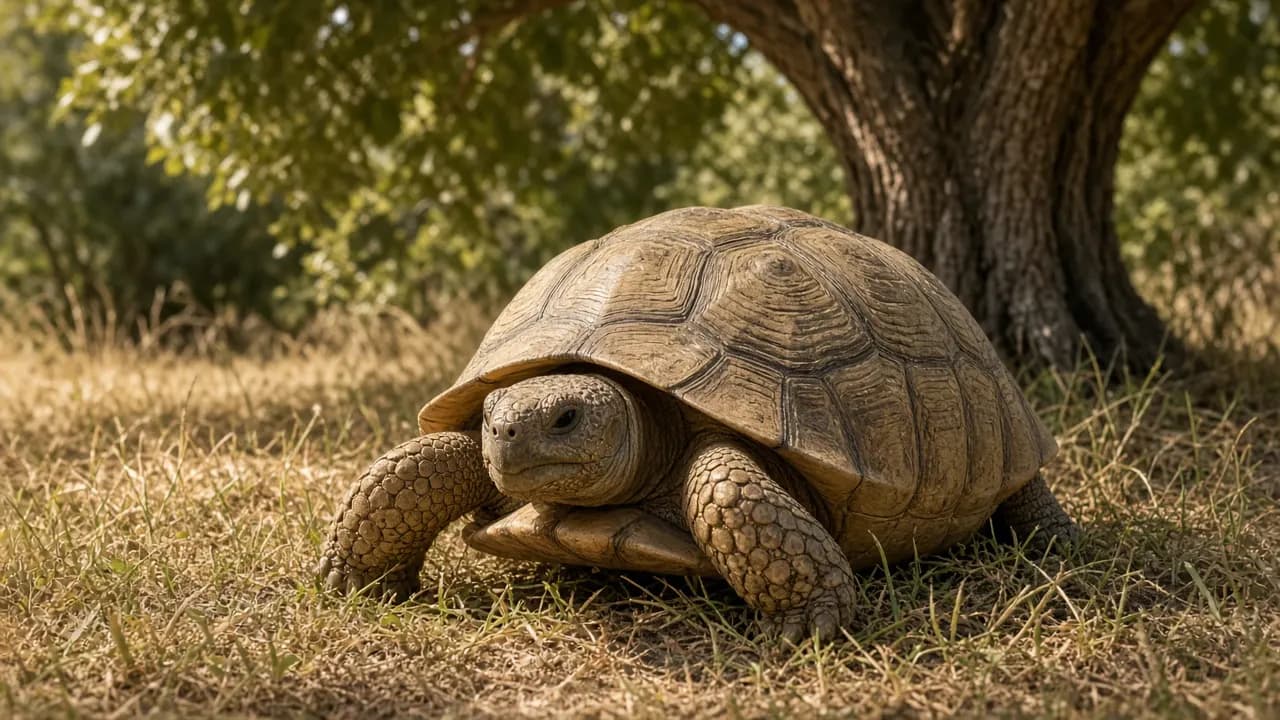
Record-breaking tortoises are real. Jonathan, a Seychelles giant tortoise on St Helena, is thought to have hatched around 1832[12], which by our arithmetic makes him about 194 years[13] old in 2026. The previous record holder, Tu'i Malila in Tonga, lived to at least 188 years[14]. Guinness World Records' account of Jonathan's record explains how his age was estimated.
We're careful to say "thought to" and "at least", because hatch dates this old are estimates. Records also say nothing about a typical pet tortoise. For planning, the ordinary captive lifespans in veterinary references are more useful. Our article on a tortoise that outlives its owner turns that into practical steps, and the pet age calculator helps you place your own animal.
Where data runs out
What we can and can't say about reptile ashes
No published study has weighed cremated reptile remains. We use the general rule that ashes weigh about 3-5% of body weight[15], but reptile bodies vary enormously. A tortoise's shell is bone, so it may leave more than the rule suggests; a slender snake or small gecko may leave less. Our ashes weight estimator gives a starting range, and we'd always suggest asking a provider what they typically return for your species.

Free tool
Ashes weight estimator
See roughly how much ash to expect back, by species and body weight.
Editorial standards
The rules our reptile pages follow
- Contested figures are labelled as contested, with the better evidence beside them.
- Species stay separate. A chameleon lifespan is never used to describe a python.
- Country and year are attached to every figure.
- No reviews, ratings or stories about named keepers.
- Our reptile keeper polls are live votes, never cited as research.
- We don't operate crematories; our about page explains what we do.
Corrections
How to report a reptile figure that looks wrong
Use the form at the top of this page. Tell us the page, the figure, what you believe is correct and, if possible, a link to your source. Herpetologists, exotics vets and experienced keepers often know species details better than general references, and we're glad to hear from them.
We check each report against the original source. If we're wrong, we correct the figure, update the review date and recalculate any estimate that relied on it. If a claim turns out to be contested, we label it as such rather than quietly deleting it.
Limits
What our reptile research doesn't claim
We can't tell you why your reptile died, whether it's safe to handle a venomous animal's body, or whether a particular provider accepts your species. Lifespan ranges describe typical captive animals, not yours. For health and cause of death, an exotics vet is the right person; for handling and intake, see species and venomous disclosure and ask providers directly.
Did the people around you understand your grief for a reptile?
Tap an answer to vote and see how others answered. Anonymous.

Reader polls
What would you choose?
Vote anonymously and see how other readers answered. The results are live counts from people who visit this site, so they show real opinions, not a scientific sample.
Did the people around you understand your grief for a reptile?
Tap an answer to vote and see how others answered. Anonymous.
Which reptile are you planning aftercare for?
Tap an answer to vote and see how others answered. Anonymous.
If you had to decide today, which aftercare would you choose for your pet?
Tap an answer to vote and see how others answered. Anonymous.

Free tools to help you plan
Ashes weight estimator
See roughly how much ash to expect back, by species and body weight.

Pet age & senior years calculator
Convert your pet's age and see when senior-care and planning conversations usually start.

Urn size calculator
Find the urn volume you need from your pet's weight, plus keepsake and sharing options.
Questions people ask
Do most pet reptiles really die in their first year?
The best evidence says no. A peer-reviewed University of Kent study found 3.6% of pet reptiles died within a year of acquisition. A widely repeated claim of about 75% comes from a campaign group and is contested by that research, so we don't present it as fact.
How long do pet reptiles live?
It depends heavily on species. Veterinary references give ranges such as 15 to 20 years for ball pythons, 5 to 10 for bearded dragons and 25 to 50 for eastern box turtles, while Old World chameleons live only about 3 to 8 years in captivity.
How old is the oldest tortoise?
Jonathan, a Seychelles giant tortoise on St Helena, is estimated to have hatched around 1832, making him about 194 in 2026 by our arithmetic. His hatch date is an estimate, so we describe his age with that caution.
Why don't you publish ash weights for reptiles?
Because no published study has measured them. We offer a starting range using a general body-weight ratio, but shells, long thin bodies and tiny lizards can all differ from that rule. Asking a provider what they usually return for your species is more reliable.
How do I report a mistake about reptiles?
Use the form on this page. Tell us the page, the figure, what you believe is correct and your source. We'll check it, correct it if needed and note any contested claims clearly.


Sources and our estimates
- [1] About 6 million US households keep reptiles. American Pet Products Association (APPA) 2025 National Pet Owners Survey release, 2025.
- [2] A University of Kent survey found only 3.6% of pet snakes, chelonians and lizards died within one year of acquisition; boas and pythons had the lowest mortality (1.9%) and chameleons the highest (28.2%). Robinson JE, St John FA, Griffiths RA, Roberts DL. Captive Reptile Mortality Rates in the Home and Implications for the Wildlife Trade. PLoS One, 2015 (PMID 26556237), 2015.
- [3] Old World chameleons live only about 3-8 years in captivity and green anoles 4-8 years. Merck Veterinary Manual - Table: Average Life Span of Reptiles in Captivity.
- [4] Among US reptile-owning households, 43% keep turtles or tortoises and 22% keep snakes. American Pet Products Association (APPA) 2025 National Pet Owners Survey release, 2025.
- [5] About 6 million U.S. households own reptiles; turtles and tortoises account for 43% of reptile ownership, lizards 29% and snakes 22% (APPA 2025). American Pet Products Association - From Bigger Tanks to Stronger Bonds: Fish & Reptile Ownership Evolves in 2025, 2025.
- [6] There are about 600,000 pet snakes in the UK (1.3% of households). UK Pet Food (formerly PFMA) Pet Population 2026, 2026.
- [7] There are about 700,000 pet tortoises and turtles in the UK (1.6% of households). UK Pet Food (formerly PFMA) Pet Population 2026, 2026.
- [8] 3% of Australian households keep reptiles. Animal Medicines Australia, Pets in Australia 2025 (media release), 2025.
- [9] Average captive lifespans: ball python 15-20 years, boa constrictor 15-25, corn snake 10-15, bearded dragon 5-10, green iguana 5-15, leopard gecko 20+, eastern box turtle 25-50, leopard tortoise 50+. Merck Veterinary Manual - Table: Average Life Span of Reptiles in Captivity.
- [10] An often-quoted claim by an animal-protection group that about 75% of pet reptiles die in the home within their first year is disputed by the peer-reviewed Kent study, which found a much lower rate. Animal Protection Agency (advocacy group) press release on reptile mortality debate, 2015.
- [11] If U.S. reptile-owning households each acquired one reptile a year and first-year mortality matched the UK study (3.6%), about 216,000 new pet reptiles would die within a year; the contested 75% figure would imply 4.5 million. Our estimate: 6,000,000 households x 1 reptile x 3.6%; vs x 75%. How we calculate.
- [12] Jonathan, a Seychelles giant tortoise on St Helena, is estimated to have hatched around 1832 and became the oldest tortoise ever recorded at 190 in 2022. Guinness World Records - 190-year-old Jonathan becomes world's oldest tortoise ever (Jan 2022), 2022.
- [13] If Jonathan the tortoise hatched in 1832, he is about 194 years old in 2026. Our estimate: 2026 - 1832. How we calculate.
- [14] The previous record tortoise, Tu'i Malila, a radiated tortoise in Tonga, lived to at least 188 years before dying in 1965. Guinness World Records - 190-year-old Jonathan becomes world's oldest tortoise ever (Jan 2022), 1965.
- [15] Embrace notes cremated remains typically weigh about 3-5% of the pet's original body weight. Embrace Pet Insurance - Bury or Cremate Your Dog? Costs, Pros & Cons, 2025.
Seen a reptile figure you doubt? Tell us
Tell us what you need and where you are. We'll reply by email with clear options and prices so you can decide in your own time.