Reptile cremation in Oxford, from geckos to tortoises
Whether your reptile is a gecko or a 70-pound tortoise, you have time to get this right. Here's how to confirm death, what cremation costs in Oxford and how to find a provider used to reptiles.
- Tiny geckos to giant tortoises
- Straight answers on ash, shells and sheds
- No pressure, no rush
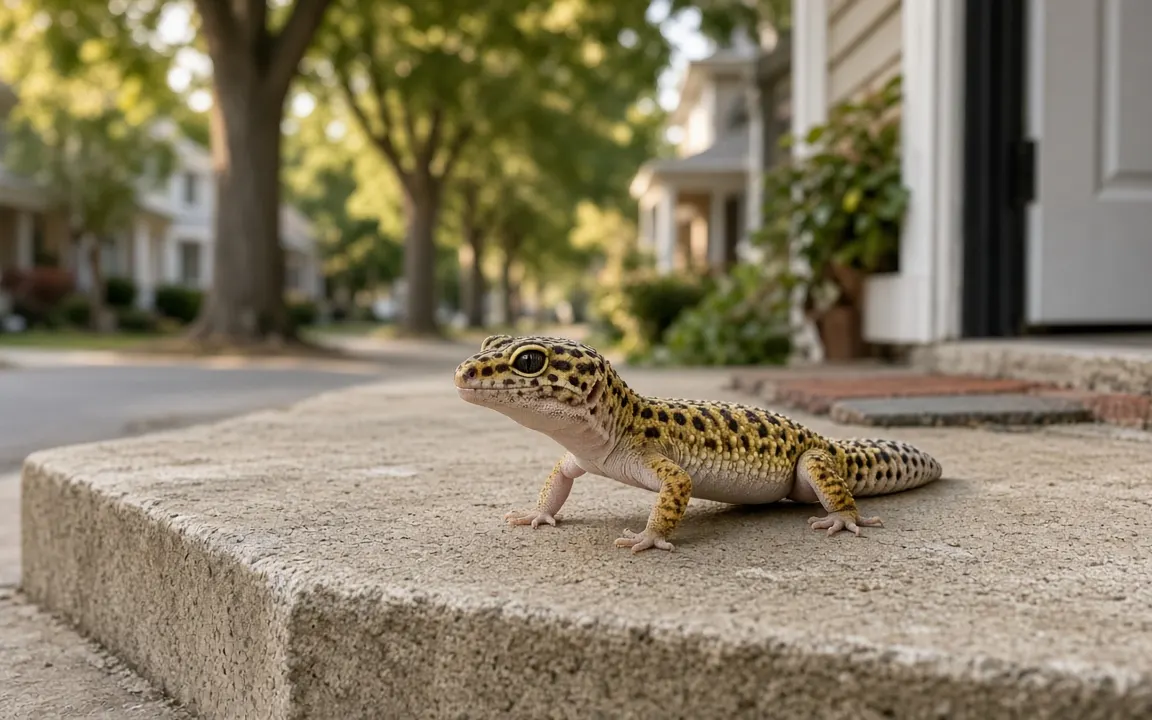
Oxford, England
Getting reptile aftercare sorted in Oxford
Oxford is a compact, crowded city of terraced houses, college buildings and flats, with tight streets in Jericho, East Oxford and Headington where parking is difficult. If your pet dies at home, a provider may need to know about access, stairs and where a vehicle can stop. Villages and suburbs beyond the ring road are easier to reach, but it's still worth describing access when you ask for options.
Many Oxford households are renting, including students and young professionals, which often makes garden burial impractical or impossible. Cremation lets you keep your pet's ashes close whatever happens next. Individual cremation returns the ashes to you; communal cremation costs less and returns none. If you'd like to scatter ashes on a meadow or by the river, check the rules for that land first.
Oxford is large enough for real choice in pet cremation but small enough that reptiles are a minority of what any one provider sees. That's no reason to worry, just a reason to ask. A good provider will tell you how they keep a small body separate, what container a long snake travels in and roughly how much ash you should expect back.
Oxford is home to about 152,000 people, the 20th-largest of the 33 England communities we cover. Reading, roughly 24 miles off, is the closest larger centre, and a share of the providers who cover Oxford run from there.
Oxford sits within easy reach of Reading (24 miles), Milton Keynes (29 miles) and Windsor (33 miles). A provider based in any of them will usually collect from Oxford; ask what the mileage adds to the bill.
83.0%[1]
In 2024, 83.0% of deaths in England & Wales ended in cremation.
6 million[2]
About 6 million US households keep reptiles.
700,000[3]
There are about 700,000 pet tortoises and turtles in the UK (1.6% of households).
3-5% of body weight[4]
Embrace notes cremated remains typically weigh about 3-5% of the pet's original body weight.
We built the this numbers from Embrace Pet Insurance and UK Pet Food (formerly PFMA) Pet Population 2026, and both are worth a look if you want the detail.
Burial or cremation? The view from England
In England, about 83.0%[1] of people are cremated, so few will think it odd to cremate a snake or bearded dragon. What does surprise many keepers is how little ash a small reptile leaves, often a teaspoon or less. Knowing that ahead of time helps you pick a keepsake that fits, rather than a standard urn that looks almost empty.
The England percentage above is from Federation of Burial and Cremation Authorities (FBCA) death & cremation statistics (2024) and refers to human funerals. Treat it as context for Oxford, not as a count of pets.
Seasonal risks for reptiles in Oxford
Seasons change reptile behavior as much as they change timing. Many species eat less and barely move in the cooler months, and tortoises may hibernate. If your reptile stopped moving during a seasonal slowdown in Oxford, a vet check is the kind thing to do before you make any plans at all.
How much to budget in Oxford, by size
UK prices are well documented thanks to the Competition and Markets Authority. Cremation costs range from GBP 50 to GBP 300+[5], from a communal cremation of a small pet to an individual cremation of a large one. Most reptiles are priced like a cat, and the large vet groups' median individual price for a cat was GBP 186.87[6].
The full price table by size is on our England page, and the services page explains what each option includes.

Free tool
Cremation cost calculator
Estimate a realistic price range for your pet's size, location and the type of cremation.
Before you bury or scatter in England
Most decisions after a reptile dies are yours to make. The exceptions are burial, scattering and anything involving a regulated species. Some reptiles are covered by wildlife-trade or invasive-species rules, which can affect selling or giving away a shell and mean a sick or dead reptile should never be released or dumped outdoors. Everything else follows the general pet rules for England.
The UK has about 700,000[3] pet tortoises and turtles and 600,000[8] pet snakes, so most pet crematoria have seen reptiles, if not often. Many UK tortoises are hibernated each winter, and a hibernating tortoise can look lifeless, so ask a vet to check first. Some tortoise species are protected under wildlife-trade rules; keep any certificate that came with yours and don't sell a shell without checking.
Home burial and scattering are governed at the England level first; our England rules summary has the detail. Then check whether Oxford or your HOA adds anything.
What to do when your reptile dies in Oxford
- Book the final appointment with a vet who treats reptiles regularly, and check whether sedation comes first. The usual approach is one injection to bring sleep, then a second to end life.
- Settle the aftercare before the day, because the consulting room is no place to weigh up options. Let the clinic know in advance if you'd like a private cremation with the ashes coming back.
- Pack a familiar hide or towel in the carrier. In cold weather, keep it warm on the journey with a wrapped heat pack.
- Ask the vet to confirm death with a Doppler before heading home. After the injection, a reptile's heart may keep up a slow beat for some time.
- Decide whether to stay in the room. Some keepers stay to the end, some say goodbye first, and neither is less loving.
- Read the cremation form before signing, making sure private or communal is ticked correctly and noting any wish about a shell, a shed or another keepsake.
- Pay ahead if the clinic allows it, and the goodbye won't end at the reception desk.
Honoring a long, quiet bond
Oxford's climate is mild and damp, with cool winters and warm summers that can bring the occasional heatwave. In cooler months you have more time to decide, but keep your pet's body wrapped, in the coolest room and away from radiators. On a hot summer day, move faster, and ask your vet whether they can hold your pet in cold storage while you choose between cremation options.
Our services overview lays out every option side by side, or compare your instinct with the poll results, look through our guides and the blog, try the free planning tools. Close to Oxford we also cover Birmingham, Manchester, Leeds and London; the full list for England and for the United Kingdom is a click away.

Reader polls
What would you choose?
Vote anonymously and see how other readers answered. The results are live counts from people who visit this site, so they show real opinions, not a scientific sample.
Have you ever kept a shed skin, scute or photo of your reptile's markings as a keepsake?
Tap an answer to vote and see how others answered. Anonymous.
What did you do with the enclosure after your reptile died?
Tap an answer to vote and see how others answered. Anonymous.
If you had to decide today, which aftercare would you choose for your pet?
Tap an answer to vote and see how others answered. Anonymous.

Free tools to help you plan
Cremation cost calculator
Estimate a realistic price range for your pet's size, location and the type of cremation.

Ashes weight estimator
See roughly how much ash to expect back, by species and body weight.

Pet age & senior years calculator
Convert your pet's age and see when senior-care and planning conversations usually start.
Questions people ask
Will I have to travel to Reading to arrange things?
Not usually. Providers based in Reading (roughly 24 miles from Oxford) collect from here as a matter of routine, and the paperwork is done by email or phone. If you want to be present for a witnessed cremation, that is when the drive matters.
Is cremation common in England?
For people, yes: about 83.0%[1] of England deaths end in cremation, according to Federation of Burial and Cremation Authorities (FBCA) death & cremation statistics (2024). Nobody publishes the same figure for pets, but in our experience pet choices in Oxford follow the human pattern closely, so cremation is the default most families here start from.
Which nearby towns can I compare with Oxford?
The closest communities we cover are Reading (about 24 miles), Milton Keynes (about 29 miles) and Windsor (about 33 miles). Providers based in those places often serve Oxford too. Ask each one for a written total that includes collection, so the distance is priced in.
Is it safe to handle my reptile's body?
Yes, with basic hygiene. Reptiles often carry Salmonella, so wear disposable gloves, double-bag the body, keep it away from food and wash your hands for at least 20 seconds afterwards. Keep young children and anyone with a weakened immune system away. For venomous species, use tongs near the head, because a bite reflex can remain.
Can I bury my reptile at home in England?
Often yes, on land you own and subject to local rules on depth and distance from water. Bury deep enough that animals can't dig it up, away from wells and vegetable beds, and never in a pot you'll keep indoors. If you rent or might move, cremation lets you keep your reptile with you wherever you go.
Can I freeze my reptile before cremation?
Yes, once death is definitely confirmed. Double-bag the body, place it in a labelled, lidded tub and keep it away from food. Freeze only if the wait will be more than a couple of days and you don't want a post-mortem, because freezing damages tissue. For shorter waits, the fridge is enough.


Sources and our estimates
- [1] In 2024, 83.0% of deaths in England & Wales ended in cremation. Federation of Burial and Cremation Authorities (FBCA) death & cremation statistics, 2024.
- [2] About 6 million US households keep reptiles. American Pet Products Association (APPA) 2025 National Pet Owners Survey release, 2025.
- [3] There are about 700,000 pet tortoises and turtles in the UK (1.6% of households). UK Pet Food (formerly PFMA) Pet Population 2026, 2026.
- [4] Embrace notes cremated remains typically weigh about 3-5% of the pet's original body weight. Embrace Pet Insurance - Bury or Cremate Your Dog? Costs, Pros & Cons, 2025.
- [5] UK cremation prices range from about GBP 50 for a communal cremation of a small pet to over GBP 300 for an individual cremation of a large pet (CMA). UK Competition and Markets Authority - Veterinary services for household pets, Provisional decision report Part A (Oct 2025), 2025.
- [6] Average of UK large vet groups' median individual cremation prices: GBP 186.87 for a cat. UK Competition and Markets Authority - Final report Appendix K: Cremations pricing, mark-ups and costs (24 Mar 2026), 2024.
- [7] Private cremation cost per pound falls with size in the US: roughly $9.2/lb for a 15 lb pet, $4.2/lb at 60 lb and about $4.0/lb at 100 lb. Our estimate: band midpoint price / representative weight: 0-30 lb (midpoint $137.50 / 15 lb) = $9.17/lb; 51-70 lb ($250 / 60 lb) = $4.17/lb; over 90 lb ($400 / ~100 lb) = $4.00/lb. How we calculate.
- [8] There are about 600,000 pet snakes in the UK (1.3% of households). UK Pet Food (formerly PFMA) Pet Population 2026, 2026.
Tell us about your reptile
Tell us what you need and where you are. We'll reply by email with clear options and prices so you can decide in your own time.