Reptile cremation in Kansas City
Whether your reptile is a gecko or a 70-pound tortoise, you have time to get this right. Here's how to confirm death, what cremation costs in Kansas City and how to find a provider used to reptiles.
- Safe handling and Salmonella tips
- Private or communal, explained simply
- Help with large snakes and heavy tortoises
Kansas City, Kansas
Getting reptile aftercare sorted in Kansas City
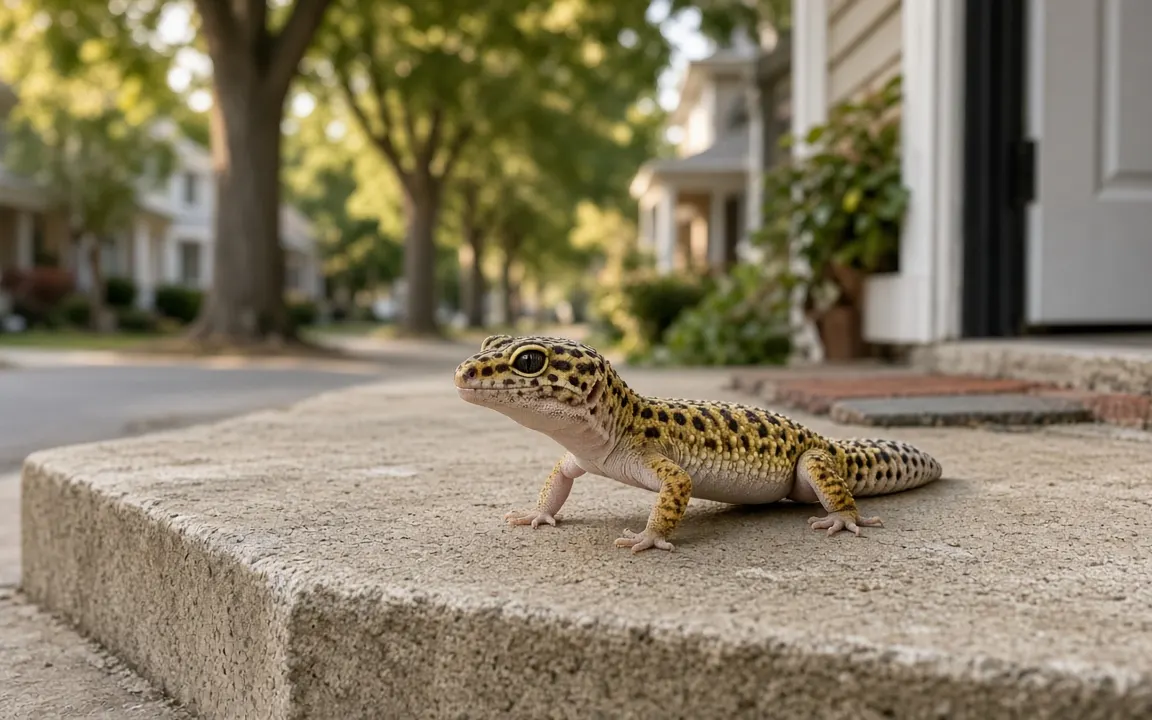
Kansas City, Kansas, has older neighbourhoods of bungalows and frame houses on the hills near downtown and Strawberry Hill, and newer homes spreading west toward the Legends and the county lake. Many older streets are steep, with front steps up to the house. If your pet dies at home, mention the steps, any alley access and where a vehicle could park when you ask for options.
Many Wyandotte County families have traditionally buried pets in the backyard, and that's still common where lots allow. Cremation has become a popular alternative, especially for renters and families who might move. Private cremation brings the ashes home to Wyandotte County; communal cremation is the lower-cost route and returns none. Ask for a written total including collection, the cremation itself and the container the ashes come back in.
Some providers serving Kansas City are based out of town, closer to a larger centre such as Kansas City, because crematories need space and permits. For a reptile that's rarely a problem: small bodies travel easily in a sealed, labelled tub, and many families simply drop their pet at the vet. What matters is a written promise about private cremation and a return date.
Kansas City's population is around 157,805, the 3rd-largest of the 23 Kansas communities we cover. The nearest larger centre is Kansas City, about 3 miles (5 km) away, which is where some providers serving Kansas City are based.
The closest communities we cover are Kansas City (3 miles, a larger centre), Gladstone (8 miles) and Prairie Village (9 miles). Providers serving those towns often travel to Kansas City too, so it can be worth asking them for a quote.
64.6%[1]
The NFDA projected Kansas's cremation rate at 64.6% for 2024.
6 million[2]
About 6 million US households keep reptiles.
700,000[3]
There are about 700,000 pet tortoises and turtles in the UK (1.6% of households).
3-5% of body weight[4]
Embrace notes cremated remains typically weigh about 3-5% of the pet's original body weight.
Where these figures come from: Embrace Pet Insurance and American Pet Products Association (APPA) 2025 National Pet Owners Survey release.
How Kansas thinks about cremation
When roughly 64.6%[1] of local funerals in Kansas are cremations, vets usually have a cremation form ready but may ask fewer questions than you'd like. Volunteer the details yourself: species, weight, length, any shell you want kept and that you'd like the ashes back. A form filled in quickly can default to communal.
We take the Kansas rate from NFDA 2024 Cremation & Burial Report state projections (via Occasional Sage) (2024). It is a human statistic; there is no equivalent pet figure for Kansas City, and we would rather show a real number than invent one.
Seasons, brumation and timing in Kansas City
Kansas City gets both extremes: highs around 90°F in July and freezing lows in January, February and December. For reptile keepers that means two risky seasons. Summer heat waves and winter cold snaps both strain vivarium heating and cooling, and a power cut in either can be fatal. A battery thermometer with a max-min reading shows you what happened overnight.
Seasons like Kansas City's create two kinds of confusion. In winter, a brumating reptile can look dead; in summer, a tortoise may shelter in its burrow for days. Either way the rule is the same: keep it at its usual temperature, look for small signs of life, and ask a vet to confirm before freezing, burying or booking a cremation.
Budgeting for a snake, lizard or tortoise in Kansas City
In a US survey, 61% of owners said the cost of aftercare worried them[5]. For reptiles the numbers are usually modest, because most sit in the lowest band shown below. The simplest way to keep a Kansas City quote honest is to give the species, the weight and, for snakes, the length, then ask for one written total.
The full price table by size is on our Kansas page, and the services page explains what each option includes.

Free tool
Cremation cost calculator
Estimate a realistic price range for your pet's size, location and the type of cremation.
What Kansas allows for burial and ashes
Keepers of aquatic turtles sometimes feel drawn to return a turtle to a pond or river after it dies. Please don't: a body left in water can spread disease to wild turtles, and releasing turtles is restricted in many places. The notes below explain the burial and scattering options Kansas permits, which are the safer routes.
Not sure which office covers Kansas City? The Kansas local government directory is the official list.
For Kansas's rules on burying a pet at home or scattering ashes, see the Kansas guide. Local rules in Kansas City can be stricter than the state's, especially in homeowners' associations and rentals.
What to do when your reptile dies in Kansas City
- Leave the heating as it is for a moment while you note the temperatures at the basking spot and the cool end. Your vet's first question will be about them.
- Watch before you touch. Spend a whole minute watching the throat and sides for any slow breathing, and check for sunken eyes or stiffness in the body.
- Lift your reptile out with gloved hands onto a clean towel in a shallow box, and keep it at room temperature until someone qualified has checked it.
- Ring the clinic as soon as it opens to request an appointment that day, and say what species it is so the receptionist picks a vet who knows reptiles.
- Once death is confirmed, let the calendar decide storage: the fridge for a pickup within two days, the freezer for anything longer.
- Ask for a written quote naming the species, weight and whether you want ashes back. Our cost calculator gives a starting figure.
- Strip and disinfect the enclosure last, after the body has gone, so you aren't facing both jobs at once.
Keeping your reptile close
Summers in Kansas City reach around 90F with heavy humidity, and winters bring snow, ice and lows in the 20s F. In summer, cool your pet's body right away with ice packs wrapped in towels in the coolest room. Spring is tornado season across the region, and severe storms can close roads for a time; if so, keep your pet cool and wait until travel is safe.
Every option Kansas City families choose between is on the services page, or compare your instinct with the poll results, there are guides for the big decisions and articles for the details, run the numbers with the free planning tools. More local pages: Olathe, Shawnee, Topeka and Overland Park, the Kansas overview and every city in the United States.

Reader polls
What would you choose?
Vote anonymously and see how other readers answered. The results are live counts from people who visit this site, so they show real opinions, not a scientific sample.
What did you do with the enclosure after your reptile died?
Tap an answer to vote and see how others answered. Anonymous.
Have you ever kept a shed skin, scute or photo of your reptile's markings as a keepsake?
Tap an answer to vote and see how others answered. Anonymous.
If you had to decide today, which aftercare would you choose for your pet?
Tap an answer to vote and see how others answered. Anonymous.

Free tools to help you plan
Cremation cost calculator
Estimate a realistic price range for your pet's size, location and the type of cremation.

Ashes weight estimator
See roughly how much ash to expect back, by species and body weight.

Pet age & senior years calculator
Convert your pet's age and see when senior-care and planning conversations usually start.
Questions people ask
Can a provider from a neighbouring town collect from Kansas City?
Usually yes. Kansas City is about 3 miles away, Gladstone is about 8 miles away and Prairie Village is about 9 miles away, all inside a normal collection radius. Get the mileage written into the quote so there is no surprise on the day.
Is cremation common in Kansas?
For people, yes: about 64.6%[1] of Kansas deaths end in cremation, according to NFDA 2024 Cremation & Burial Report state projections (via Occasional Sage) (2024). Nobody publishes the same figure for pets, but in our experience pet choices in Kansas City follow the human pattern closely, so cremation is the default most families here start from.
When is the hardest time of year to arrange a burial in Kansas City?
January, February and December: average lows are below freezing then, and frozen ground makes a home grave slow or impossible until it thaws. The other pressure point is July, when highs around 90°F mean a body needs cooling and collecting quickly.
Will I have to travel to Kansas City to arrange things?
Not usually. Providers based in Kansas City (roughly 3 miles from Kansas City) collect from here as a matter of routine, and the paperwork is done by email or phone. If you want to be present for a witnessed cremation, that is when the drive matters.
How long until I get my reptile's ashes back?
Many families get private cremation ashes back within one to two weeks, and 5-10 days[7] is commonly quoted in the US. From a smaller town, where the crematory may collect only on certain days, it can take longer. Ask for an expected return date when you book, and whether the ashes come by post or for collection.
Can I freeze my reptile before cremation?
Yes, once death is definitely confirmed. Double-bag the body, place it in a labelled, lidded tub and keep it away from food. Freeze only if the wait will be more than a couple of days and you don't want a post-mortem, because freezing damages tissue. For shorter waits, the fridge is enough.


Sources and our estimates
- [1] The NFDA projected Kansas's cremation rate at 64.6% for 2024. NFDA 2024 Cremation & Burial Report state projections (via Occasional Sage), 2024.
- [2] About 6 million US households keep reptiles. American Pet Products Association (APPA) 2025 National Pet Owners Survey release, 2025.
- [3] There are about 700,000 pet tortoises and turtles in the UK (1.6% of households). UK Pet Food (formerly PFMA) Pet Population 2026, 2026.
- [4] Embrace notes cremated remains typically weigh about 3-5% of the pet's original body weight. Embrace Pet Insurance - Bury or Cremate Your Dog? Costs, Pros & Cons, 2025.
- [5] 61% of US owners in the Cooney survey rated the cost of after-death body care as a concern (27.9% concerned, 33.1% very concerned). Cooney, Kogan, Brooks, Ellis - Pet Owners' Expectations for Pet End-of-Life Support and After-Death Body Care, Topics in Companion Animal Medicine (2020), 2020.
- [6] The median price multiple of private (ashes returned) over communal cremation across 8 markets is about 2.0x, ranging from 1.25x (Tokyo) to 5.2x (Auckland). Our estimate: median(private_price / communal_price) same weight band: US CareCredit 51-70 lb midpoints (250/75) = 3.33x; Auckland 15-25 kg (445/85) = 5.24x; Norway 1-20 kg (3790/1190) = 3.18x; Singapore 10-20 kg (480/260) = 1.85x; Ontario 25-250 lb (549/279) = 1.97x; Tokyo 20-30 kg (38500/30800) = 1.25x; France 20 kg midpoints (200/95) = 2.11x; Germany range midpoints (270/145) = 1.86x. How we calculate.
- [7] A US aftercare guide says many families receive private cremation ashes within about one to two weeks, with 5-10 days commonly quoted. Funeral.com - Pet Cremation Timelines: How Long Until Ashes Are Returned, 2026.
Get reptile cremation options in Kansas City
Tell us what you need and where you are. We'll reply by email with clear options and prices so you can decide in your own time.