Reptile cremation in Georgetown
From shed-skin keepsakes to tortoise shells, reptile aftercare in Georgetown involves choices no other pet leaves you. Here's how cremation works locally and what it usually costs.
- Confirm death before anything is decided
- Providers in Georgetown that accept reptiles
- Written prices by size, by email
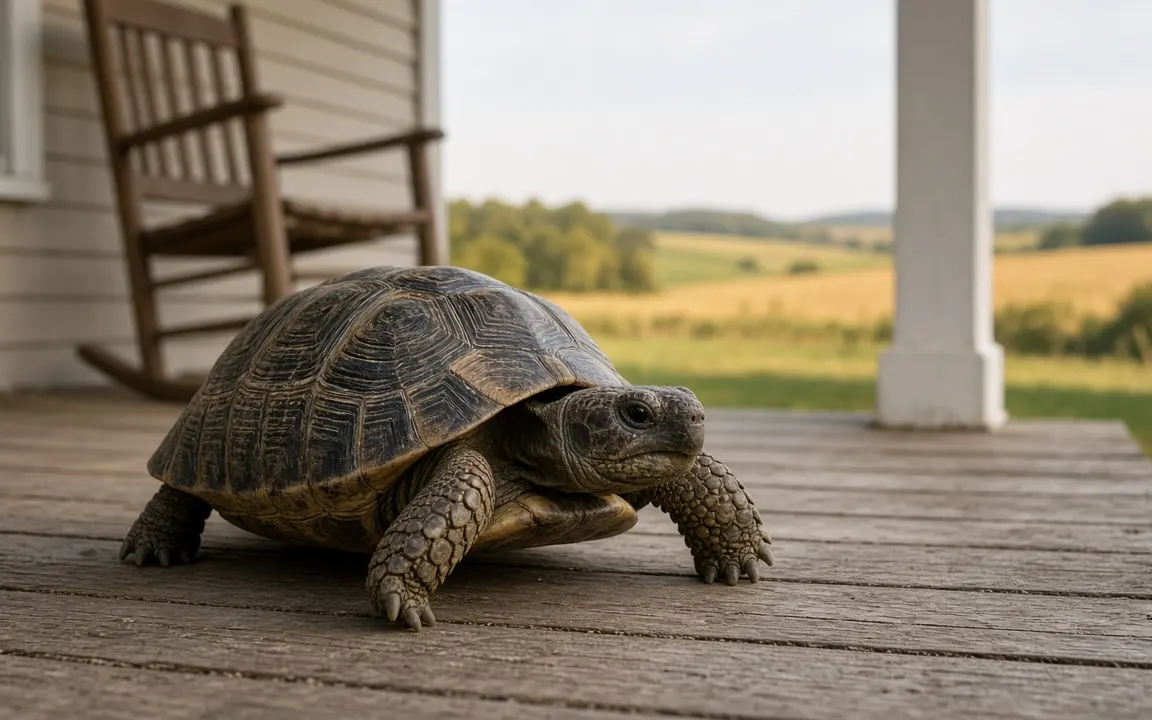
Georgetown, Kentucky
Where Georgetown keepers turn for help
Royal Spring, where the town began, still bubbles up near downtown, and Elkhorn Creek winds through the countryside around it, past stone fences and pastures that many local pets know from weekend outings. Summer highs sit in the upper 80s with heavy humidity, and winters are gentler than in the northern states, with most freezing nights between December and February. Warm spells call for quick cooling on tile or concrete with ice wrapped in cloth.
Georgetown is the Scott County seat, about 16 miles north of Lexington along I-75, and one of the faster-growing towns in Kentucky since a large Toyota plant opened here in the 1980s. Housing runs from historic homes near the courthouse square and Georgetown College to wide subdivisions of newer houses on the edges. Lexington-area cremation services generally reach Georgetown, so confirm pickup timing and whether the drive adds a fee.
A small town like Georgetown can make the grief feel lonelier, because fewer people around you keep reptiles or understand the bond. Online keepers' groups fill that gap for many people. They're also a practical resource: someone there has almost certainly arranged cremation for a snake or tortoise from a rural area and can tell you how it went.
With roughly 40,883 residents, Georgetown is the 6th-largest of the 26 Kentucky communities we cover. The nearest larger centre is Lexington, about 16 miles (25 km) away, which is where some providers serving Georgetown are based.
Georgetown sits within easy reach of Lexington (15 miles, a larger centre), Frankfort (19 miles) and Nicholasville (26 miles). A provider based in any of them will usually collect from Georgetown; ask what the mileage adds to the bill.
44.0%[1]
The NFDA projected Kentucky's cremation rate at 44.0% for 2024.
6 million[2]
About 6 million US households keep reptiles.
700,000[3]
There are about 700,000 pet tortoises and turtles in the UK (1.6% of households).
3-5% of body weight[4]
Embrace notes cremated remains typically weigh about 3-5% of the pet's original body weight.
The numbers above come from Embrace Pet Insurance and UK Pet Food (formerly PFMA) Pet Population 2026, if you'd like to read the original sources.
How Kentucky thinks about cremation
Low cremation rates, like the 44.0%[1] seen in Kentucky, often mean fewer providers, and sometimes a smaller operation where one person handles everything. That can work in a keeper's favor. Ask whether you can drop your reptile off in person, meet whoever will cremate it and collect the ashes yourself rather than through the clinic.
The Kentucky percentage above is from NFDA 2024 Cremation & Burial Report state projections (via Occasional Sage) (2024) and refers to human funerals. Treat it as context for Georgetown, not as a count of pets.
Seasonal risks for reptiles in Georgetown
Tortoise keepers in cold places like Georgetown often hibernate their animals in a temperature-controlled box or a dedicated fridge through January, February and December. Weigh your tortoise regularly while it sleeps; slow weight loss is expected, but a sudden drop is a reason to wake it and call a vet. If one doesn't survive hibernation, ask about a post-mortem before cremation.
Georgetown has average lows at or below freezing in January, February and December, and that's when many reptiles naturally slow down for brumation. A brumating snake or tortoise can look lifeless for weeks. Before you assume the worst in winter, keep it at its normal temperature and ask a reptile vet to check for a heartbeat. Never freeze an animal you aren't certain has died.

What reptile cremation costs in Georgetown
Rush service is where Georgetown bills jump. A 24-hour turnaround typically adds $50 to $150[5], and by our estimate weekend rush at one provider costs six times its weekday fee[6]. For a reptile safely refrigerated, the standard slot, about a week in many places, costs nothing extra.
Prices for Georgetown track the wider Kentucky market, so use the Kentucky price table as your baseline and the services page to see what is included.

Free tool
Cremation cost calculator
Estimate a realistic price range for your pet's size, location and the type of cremation.
Burial, scattering and protected species in Kentucky
Keepers of aquatic turtles sometimes feel drawn to return a turtle to a pond or river after it dies. Please don't: a body left in water can spread disease to wild turtles, and releasing turtles is restricted in many places. The notes below explain the burial and scattering options Kentucky permits, which are the safer routes.
Not sure which office covers Georgetown? The Kentucky local government directory is the official list.
Home burial and scattering are governed at the Kentucky level first; our Kentucky rules summary has the detail. Then check whether Georgetown or your HOA adds anything.
A plan for the next few days
- Ask how long the clinic can hold your reptile and whether it stays chilled. Most can keep a small body for several days.
- Say whether you want a post-mortem right at the start; once the body is frozen or cremated, that option is gone.
- Find out which crematory the clinic uses and ask if reptiles there are cremated alone or together with other animals.
- Take your reptile home instead if you prefer to bury it in the garden or use another provider, and request a sealed container with a label.
- Check the release paperwork: the name, the species and the service you picked ought to appear on the form.
- Ask for a call when the ashes reach the clinic, and find out if a quieter time can be arranged for collecting them.
Sheds, shells and keepsakes
Many Georgetown families moved here for work in the past few decades and have no family farm nearby to bury an animal, so cremation has become a common choice even though Kentucky overall still favors burial for people. Ashes often stay in the house, on a shelf near the pet's old bed, or wait for a planting day in the backyard garden.
For a plain comparison of the choices, open services, read our guides and latest articles, run the numbers with the free planning tools, or look at how readers voted in our polls. You can also browse every city in the United States. Nearby, we also cover Bowling Green, Covington, Lexington and Louisville, and every city in Kentucky.

Reader polls
What would you choose?
Vote anonymously and see how other readers answered. The results are live counts from people who visit this site, so they show real opinions, not a scientific sample.
What did you do with the enclosure after your reptile died?
Tap an answer to vote and see how others answered. Anonymous.
If your tortoise or turtle died, what would you want done with the shell?
Tap an answer to vote and see how others answered. Anonymous.
If you had to decide today, which aftercare would you choose for your pet?
Tap an answer to vote and see how others answered. Anonymous.

Free tools to help you plan
Cremation cost calculator
Estimate a realistic price range for your pet's size, location and the type of cremation.

Ashes weight estimator
See roughly how much ash to expect back, by species and body weight.

Pet age & senior years calculator
Convert your pet's age and see when senior-care and planning conversations usually start.
Questions people ask
How do Kentucky attitudes to cremation compare?
NFDA 2024 Cremation & Burial Report state projections (via Occasional Sage) (2024) puts the Kentucky human cremation rate at about 44.0%[1]. We show it on the Georgetown page because pet aftercare choices tend to track it: where cremation is normal for people, communal and private pet cremation are both easy to find.
Which nearby towns can I compare with Georgetown?
The closest communities we cover are Lexington (about 15 miles), Frankfort (about 19 miles) and Nicholasville (about 26 miles). Providers based in those places often serve Georgetown too. Ask each one for a written total that includes collection, so the distance is priced in.
When is the hardest time of year to arrange a burial in Georgetown?
January, February and December: average lows are below freezing then, and frozen ground makes a home grave slow or impossible until it thaws. The other pressure point is July, when highs around 87°F mean a body needs cooling and collecting quickly.
Will I have to travel to Lexington to arrange things?
Not usually. Providers based in Lexington (roughly 16 miles from Georgetown) collect from here as a matter of routine, and the paperwork is done by email or phone. If you want to be present for a witnessed cremation, that is when the drive matters.
What happens if my reptile dies while I'm on vacation?
Your sitter should put on gloves, wrap the body in a sealed bag, put that in a lidded container in the fridge and take photos of the enclosure and thermostat. Then phone your vet, who may agree to hold the body until you're back. You don't need to rush home: a sealed, chilled body keeps for days. Check your other animals as soon as you return, especially if heating was involved.
What's the difference between private and communal cremation for a reptile?
In private cremation your reptile is cremated alone and only its ashes come back. In communal cremation several animals are cremated together and no ashes are returned. Some providers also offer partitioned cremation, where pets share a chamber but are kept apart; ask exactly how separation works, because it matters most for very small bodies.


Sources and our estimates
- [1] The NFDA projected Kentucky's cremation rate at 44.0% for 2024. NFDA 2024 Cremation & Burial Report state projections (via Occasional Sage), 2024.
- [2] About 6 million US households keep reptiles. American Pet Products Association (APPA) 2025 National Pet Owners Survey release, 2025.
- [3] There are about 700,000 pet tortoises and turtles in the UK (1.6% of households). UK Pet Food (formerly PFMA) Pet Population 2026, 2026.
- [4] Embrace notes cremated remains typically weigh about 3-5% of the pet's original body weight. Embrace Pet Insurance - Bury or Cremate Your Dog? Costs, Pros & Cons, 2025.
- [5] Rush 24-hour pet cremation typically adds $50–$150; standard turnaround is about 7 days. Memorials.com – Pet Cremation Cost Guide 2026, 2026.
- [6] Weekend rush cremation costs 6 times the weekday rush fee at one North Carolina provider. Our estimate: $300 / $50. How we calculate.
- [7] Published ashes-return times across the network's markets range from same-day (paid express) to about 4 weeks; a conservative typical window is 3-14 days. Our estimate: min/max across sources: Lambeth 3 days; US 5-10 days; RSPCA QLD within 14 days; AniCura Sweden 2-4 weeks. How we calculate.
Find a Georgetown provider that accepts reptiles
Tell us what you need and where you are. We'll reply by email with clear options and prices so you can decide in your own time.