Arranging reptile aftercare in Lake St. Louis
Losing a reptile you've cared for over many years is hard, and people don't always understand. We explain the Lake St. Louis options plainly and can send prices from providers that accept reptiles.
- Safe handling and Salmonella tips
- Private or communal, explained simply
- Help with large snakes and heavy tortoises
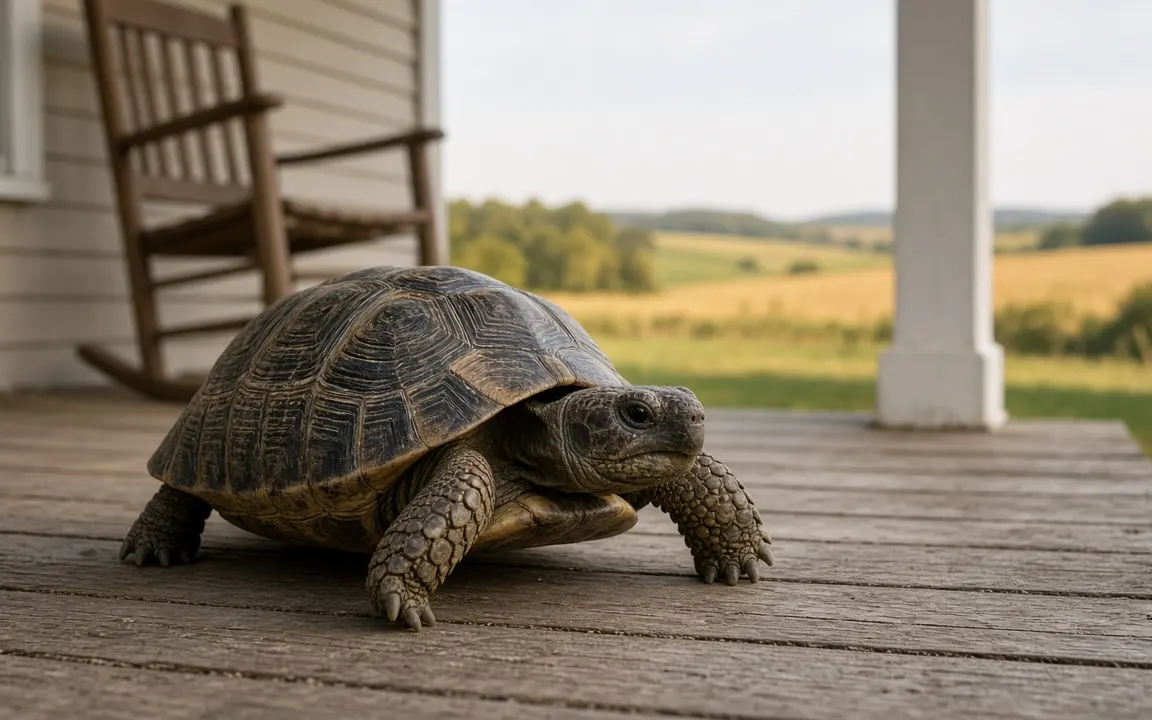
Lake St. Louis, Missouri
Getting reptile aftercare sorted in Lake St. Louis
For many residents, the lakes are the center of life: morning coffee on the dock, evening boat rides, paths along the shoreline. Community rules generally limit what can be placed in or near the water, so check with the association before any lakeside memorial. At home, a small urn by a lake-view window or a framed photo from a summer afternoon on the water can mean a great deal.
Lake St. Louis is a planned community in western St. Charles County, built around two private lakes near where I-70 and I-64 meet. Downtown St. Louis is well over half an hour east. Homes range from lakefront houses with docks to golf-course villas and newer subdivisions, most of them under community association rules. Providers based in St. Charles County usually cover the area; ask about gate or community access, pickup fees and return timing.
Crematories serving rural areas often collect from vet clinics on set days of the week, so a reptile from Lake St. Louis may wait a few days before it travels. That's fine once death is confirmed. A sealed tub in a fridge covers a day or two; for a longer wait, freezing is sensible unless you want a post-mortem, which needs a body that hasn't been frozen.
Lake St. Louis's population is around 19,129, the 39th-largest of the 43 Missouri communities we cover. The nearest larger centre is St. Louis, about 34 miles (54 km) away, which is where some providers serving Lake St. Louis are based.
The closest communities we cover are O'Fallon (3 miles, a larger centre), Wentzville (5 miles, a larger centre) and St. Peters (10 miles, a larger centre). Providers serving those towns often travel to Lake St. Louis too, so it can be worth asking them for a quote.
59.8%[1]
The NFDA projected Missouri's cremation rate at 59.8% for 2024.
6 million[2]
About 6 million US households keep reptiles.
700,000[3]
There are about 700,000 pet tortoises and turtles in the UK (1.6% of households).
3-5% of body weight[4]
Embrace notes cremated remains typically weigh about 3-5% of the pet's original body weight.
If a number here surprises you, the primary material is UK Pet Food (formerly PFMA) Pet Population 2026 and Embrace Pet Insurance; we only apply it to this.
Cremation habits in Missouri and your reptile
With about 59.8%[1] of people cremated, Missouri sits between the burial traditions of the past and a cremation-first future. For a reptile, the choice usually comes down to practicalities: do you have land, will you stay, and do you want something to keep? Cremation answers the last question; burial suits keepers with a garden they won't leave.
The Missouri percentage above is from NFDA 2024 Cremation & Burial Report state projections (via Occasional Sage) (2024) and refers to human funerals. Treat it as context for Lake St. Louis, not as a count of pets.
What Lake St. Louis's climate means for aftercare
With 3 months of freezing lows, the ground in Lake St. Louis can be too hard to dig for much of the winter. If you'd hoped to bury your reptile at home, you have options: once death is confirmed, a small body can stay double-bagged in the freezer until spring, or you can cremate now and bury the ashes when the ground softens.
Tortoise keepers in cold places like Lake St. Louis often hibernate their animals in a temperature-controlled box or a dedicated fridge through January, February and December. Weigh your tortoise regularly while it sleeps; slow weight loss is expected, but a sudden drop is a reason to wake it and call a vet. If one doesn't survive hibernation, ask about a post-mortem before cremation.

How much to budget in Lake St. Louis, by size
Embrace Pet Insurance lists three US tiers: communal at $30 to $200, partitioned at $50 to $250 and private at $100 to $500 or more[5]. Partitioned is the one to question for a reptile in Lake St. Louis, because a tiny gecko's ashes can mingle with a neighbor's in a shared chamber. Ask how separation works, or pay for private.
Prices for Lake St. Louis track the wider Missouri market, so use the Missouri price table as your baseline and the services page to see what is included.

Free tool
Cremation cost calculator
Estimate a realistic price range for your pet's size, location and the type of cremation.
Burial, scattering and protected species in Missouri
Some places license venomous snakes, large constrictors or crocodilians separately from ordinary pets. If yours was covered in Missouri, the permit office may want to hear that it has died, and any crematory will want the species named before it arrives. A dated cremation certificate satisfies most requests of this kind.
To find your county or city office in Missouri, start with the official Missouri local government directory.
The Missouri page sets out who oversees pet cremation and what the state says about burial and scattering. Lake St. Louis's own bylaws can sit on top of that, so ask before you dig.
The first 48 hours with a reptile, step by step
- Don't lift alone. A big sulcata or a very long python needs two people and a board or strong tote. Protect your back.
- Weigh it if you safely can, or make a fair guess, and for a snake take the length from snout to the end of the tail. Quotes and chamber planning depend on those two numbers.
- Lay the body on a cool, hard floor in whichever room stays darkest, keep other pets out, and tuck cloth-wrapped ice packs against each side.
- Ask for collection with lifting help, and explain the access: any gates or steps, and where the van can park relative to your door.
- Raise the shell question before anyone arrives. Keeping it means the tortoise goes to a preservation specialist before it goes anywhere else.
- Confirm which weight band you'll be charged in, because a heavy reptile can land in the same price bracket as a large dog. The aftercare comparison sets each option next to the others.
- Choose an urn for a real quantity of ash, since a giant tortoise can leave several pounds of it. Try the urn size calculator for the volume.
Honoring a long, quiet bond
Lake St. Louis sees July highs near 88F and January lows around 21F. Summer humidity off the lakes makes afternoons feel heavier, so when it's hot bring your pet down to a cool lower level, lay a soft blanket down and add ice packs wrapped in cloth. In midwinter, a closed garage stays cold enough overnight while you choose a provider in the morning.
Compare every option on our services page, run the numbers with the free planning tools, or see how other readers answered in our polls, go deeper with the guides or catch up on recent articles. More local pages: Kansas City, Lee's Summit, St. Louis and Independence, the Missouri overview and every city in the United States.

Reader polls
What would you choose?
Vote anonymously and see how other readers answered. The results are live counts from people who visit this site, so they show real opinions, not a scientific sample.
If your tortoise or turtle died, what would you want done with the shell?
Tap an answer to vote and see how others answered. Anonymous.
For a small lizard or gecko, would you still choose private cremation knowing only a pinch of ash may come back?
Tap an answer to vote and see how others answered. Anonymous.
If you had to decide today, which aftercare would you choose for your pet?
Tap an answer to vote and see how others answered. Anonymous.

Free tools to help you plan
Cremation cost calculator
Estimate a realistic price range for your pet's size, location and the type of cremation.

Ashes weight estimator
See roughly how much ash to expect back, by species and body weight.

Pet age & senior years calculator
Convert your pet's age and see when senior-care and planning conversations usually start.
Questions people ask
Can a provider from a neighbouring town collect from Lake St. Louis?
Usually yes. O'Fallon is about 3 miles away, Wentzville is about 5 miles away and St. Peters is about 10 miles away, all inside a normal collection radius. Get the mileage written into the quote so there is no surprise on the day.
Will I have to travel to St. Louis to arrange things?
Not usually. Providers based in St. Louis (roughly 34 miles from Lake St. Louis) collect from here as a matter of routine, and the paperwork is done by email or phone. If you want to be present for a witnessed cremation, that is when the drive matters.
How do Missouri attitudes to cremation compare?
NFDA 2024 Cremation & Burial Report state projections (via Occasional Sage) (2024) puts the Missouri human cremation rate at about 59.8%[1]. We show it on the Lake St. Louis page because pet aftercare choices tend to track it: where cremation is normal for people, communal and private pet cremation are both easy to find.
When is the hardest time of year to arrange a burial in Lake St. Louis?
January, February and December: average lows are below freezing then, and frozen ground makes a home grave slow or impossible until it thaws. The other pressure point is July, when highs around 88°F mean a body needs cooling and collecting quickly.
What's the difference between private and communal cremation for a reptile?
In private cremation your reptile is cremated alone and only its ashes come back. In communal cremation several animals are cremated together and no ashes are returned. Some providers also offer partitioned cremation, where pets share a chamber but are kept apart; ask exactly how separation works, because it matters most for very small bodies.
What happens if my reptile dies while I'm on vacation?
Your sitter should put on gloves, wrap the body in a sealed bag, put that in a lidded container in the fridge and take photos of the enclosure and thermostat. Then phone your vet, who may agree to hold the body until you're back. You don't need to rush home: a sealed, chilled body keeps for days. Check your other animals as soon as you return, especially if heating was involved.


Sources and our estimates
- [1] The NFDA projected Missouri's cremation rate at 59.8% for 2024. NFDA 2024 Cremation & Burial Report state projections (via Occasional Sage), 2024.
- [2] About 6 million US households keep reptiles. American Pet Products Association (APPA) 2025 National Pet Owners Survey release, 2025.
- [3] There are about 700,000 pet tortoises and turtles in the UK (1.6% of households). UK Pet Food (formerly PFMA) Pet Population 2026, 2026.
- [4] Embrace notes cremated remains typically weigh about 3-5% of the pet's original body weight. Embrace Pet Insurance - Bury or Cremate Your Dog? Costs, Pros & Cons, 2025.
- [5] Embrace Pet Insurance lists US communal cremation at $30-$200, partitioned at $50-$250, private at $100-$500+ and aquamation at $80-$450. Embrace Pet Insurance - Bury or Cremate Your Dog? Costs, Pros & Cons, 2025.
- [6] Published ashes-return times across the network's markets range from same-day (paid express) to about 4 weeks; a conservative typical window is 3-14 days. Our estimate: min/max across sources: Lambeth 3 days; US 5-10 days; RSPCA QLD within 14 days; AniCura Sweden 2-4 weeks. How we calculate.
Find a Lake St. Louis provider that accepts reptiles
Tell us what you need and where you are. We'll reply by email with clear options and prices so you can decide in your own time.