Saying goodbye to your reptile in Cincinnati
Most crematories in Cincinnati are set up for cats and dogs. We explain what to ask so your snake, lizard or tortoise is handled with care, and we can email you local options.
- Honest Cincinnati costs for small pets
- Shell and shed keepsakes planned early
- Local weather and brumation advice
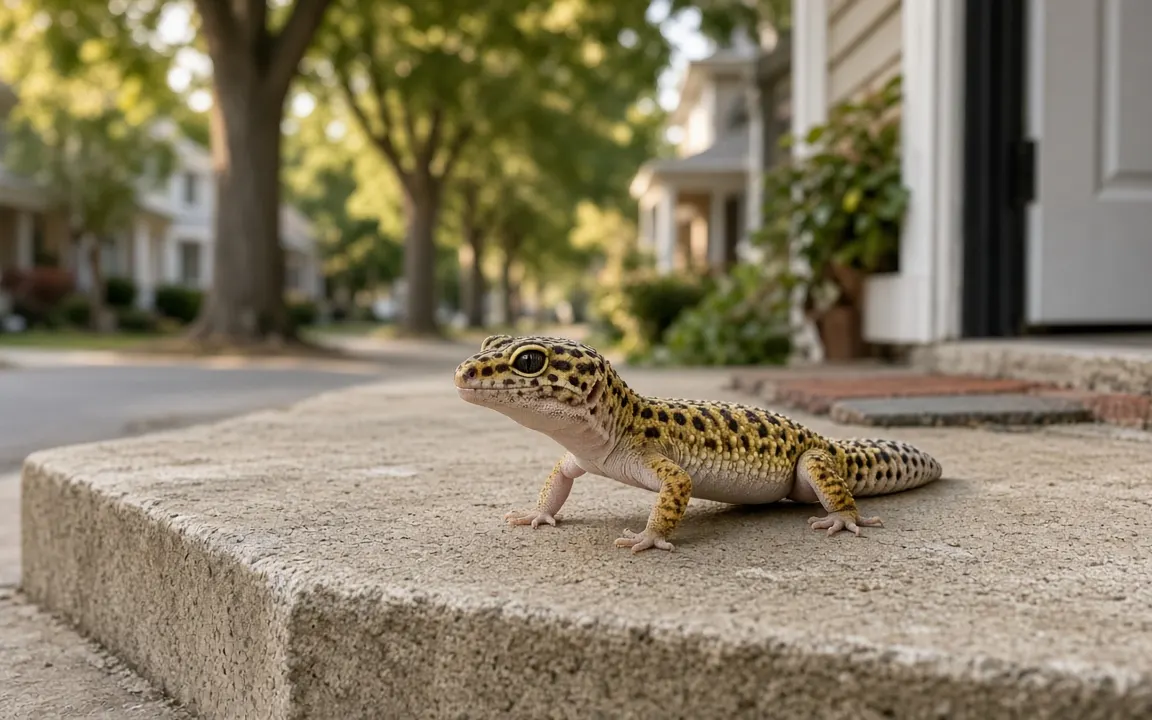
Cincinnati, Ohio
Where Cincinnati keepers turn for help
Cincinnati is a city of hills and older neighborhoods, from Over-the-Rhine's brick rowhouses and Clifton's apartments to hillside homes with steep driveways in places like Price Hill and Mount Washington. Stairs, narrow streets and parking can all complicate moving a pet. The city says it does not remove animals from private property, so if your pet dies at home, arranging aftercare is up to you. Mention access details when you ask for options.
Cincinnati summers are hot and humid, with July highs in the upper 80s, and winters bring freezing temperatures from December through February. In summer, keep a pet's body cool within a few hours using an air-conditioned room, a towel and ice packs wrapped in cloth. In winter, frozen ground and hillside clay soils can make backyard burial difficult, even where it's allowed.
Cincinnati is large enough for real choice in pet cremation but small enough that reptiles are a minority of what any one provider sees. That's no reason to worry, just a reason to ask. A good provider will tell you how they keep a small body separate, what container a long snake travels in and roughly how much ash you should expect back.
Cincinnati is home to about 314,367 people, the 3rd-largest of the 106 Ohio communities we cover.
Families in Cincinnati often end up using a provider from Covington (1 miles), Norwood (5 miles) and Erlanger (6 miles). That is normal: crematories serve a radius, not a single town, and the drive is priced into collection.
59.1%[1]
The NFDA projected Ohio's cremation rate at 59.1% for 2024.
6 million[2]
About 6 million US households keep reptiles.
700,000[3]
There are about 700,000 pet tortoises and turtles in the UK (1.6% of households).
3-5% of body weight[4]
Embrace notes cremated remains typically weigh about 3-5% of the pet's original body weight.
None of the figures on this this page are ours alone: they rest on Embrace Pet Insurance and American Pet Products Association (APPA) 2025 National Pet Owners Survey release.
Cremation customs in Ohio, applied to reptiles
Ohio splits its funerals between burial and cremation, with cremation at 59.1%[1]. Pet cemeteries and pet crematories often work side by side there, and some offer a third route: burying cremated remains in a small plot. For a reptile that is a middle path, with a place to visit and no worry about a future house move.
Source for the Ohio number: NFDA 2024 Cremation & Burial Report state projections (via Occasional Sage) (2024). Nobody publishes a pet cremation rate for Cincinnati, so the human figure is the best local signal available.
Seasons, brumation and timing in Cincinnati
With 3 months of freezing lows, the ground in Cincinnati can be too hard to dig for much of the winter. If you'd hoped to bury your reptile at home, you have options: once death is confirmed, a small body can stay double-bagged in the freezer until spring, or you can cremate now and bury the ashes when the ground softens.
Cincinnati has average lows at or below freezing in January, February and December, and that's when many reptiles naturally slow down for brumation. A brumating snake or tortoise can look lifeless for weeks. Before you assume the worst in winter, keep it at its normal temperature and ask a reptile vet to check for a heartbeat. Never freeze an animal you aren't certain has died.

Paying for a reptile's cremation in Cincinnati
In a US survey, 61% of owners said the cost of aftercare worried them[5]. For reptiles the numbers are usually modest, because most sit in the lowest band shown below. The simplest way to keep a Cincinnati quote honest is to give the species, the weight and, for snakes, the length, then ask for one written total.
Rather than repeat the price table on every city page, we keep one for Ohio: Ohio costs. What each service includes is on the services page.

Free tool
Cremation cost calculator
Estimate a realistic price range for your pet's size, location and the type of cremation.
Rules reptile keepers should know in Ohio
The rules that matter most after a reptile dies usually concern land rather than cremation. Burying on property you don't own, or scattering in a park or waterway, can need permission in Ohio. A small lizard leaves so little ash that many keepers skip scattering entirely and keep it at home, which avoids the question.
For what Cincinnati itself says, see City of Cincinnati 311. Its pages cover municipal collection; a private cremation is arranged separately. Not sure which office covers Cincinnati? The Ohio local government directory is the official list.
Home burial and scattering are governed at the Ohio level first; our Ohio rules summary has the detail. Then check whether Cincinnati or your HOA adds anything.
What to do when your reptile dies in Cincinnati
- Note what happened. Check the enclosure temperatures; if there was a power cut or heating failure, tell your vet, especially if you keep other reptiles.
- Look gently for signs of life with the tank at its usual warmth: the tongue, the eyes, the faint rise of a breath. A vet should then make the confirmation.
- Handle with gloves, and use tongs near the head if the species is venomous. A bite reflex can remain after death.
- Store the body cold in a sealed tub, double-bagged, once death is confirmed.
- Tell the provider about the shell or the size before collection. A tortoise shell can be kept, but only if you decide before cremation.
- Keep a shed or scute if there is one to save: let it dry, then lay it flat behind glass.
- Give yourself time. The quiet of an unlit vivarium can hit hard. There's no rush to take it down.
Honoring a long, quiet bond
Cincinnati's city services separate animals found on public roads, which have their own report category, from animals on private property, where requests go to a health inspector rather than a removal crew. For a pet that dies at home, that means private cremation or burial is your decision. Ask whether a cremation is private or communal, and get the full price in writing, including collection.
Every option Cincinnati families choose between is on the services page, or look at how readers voted in our polls, try the free planning tools, look through our guides and the blog. You can also browse every city in the United States. Nearby, we also cover Parma, Cleveland, Akron and Columbus, and every city in Ohio.

Reader polls
What would you choose?
Vote anonymously and see how other readers answered. The results are live counts from people who visit this site, so they show real opinions, not a scientific sample.
For a small lizard or gecko, would you still choose private cremation knowing only a pinch of ash may come back?
Tap an answer to vote and see how others answered. Anonymous.
Have you ever kept a shed skin, scute or photo of your reptile's markings as a keepsake?
Tap an answer to vote and see how others answered. Anonymous.
If you had to decide today, which aftercare would you choose for your pet?
Tap an answer to vote and see how others answered. Anonymous.

Free tools to help you plan
Cremation cost calculator
Estimate a realistic price range for your pet's size, location and the type of cremation.

Ashes weight estimator
See roughly how much ash to expect back, by species and body weight.

Pet age & senior years calculator
Convert your pet's age and see when senior-care and planning conversations usually start.
Questions people ask
How does Cincinnati's weather affect reptile aftercare?
July is the hottest month in Cincinnati, with average highs around 87°F, so prompt collection matters most then. Average lows drop below freezing in January, February and December, which can make digging a grave hard until spring.
Why does the Cincinnati page quote a human cremation rate?
Because it is the best local signal we have. NFDA 2024 Cremation & Burial Report state projections (via Occasional Sage) (2024) reports about 59.1%[1] of Ohio residents are cremated. There is no official pet equivalent, and inventing one would be worse than quoting a real, clearly labelled number.
Can a provider from a neighbouring town collect from Cincinnati?
Usually yes. Covington is about 1 miles away, Norwood is about 5 miles away and Erlanger is about 6 miles away, all inside a normal collection radius. Get the mileage written into the quote so there is no surprise on the day.
How can I tell if my reptile is brumating or has died?
It can be genuinely hard. A brumating reptile may breathe only a few times an hour and barely respond to touch. Keep it at its normal winter temperature, watch for a tongue flick or slight eye movement, and ask a reptile vet to check for a heartbeat with a Doppler probe. Don't freeze or bury until death is confirmed.
What should I do if my tortoise dies during hibernation?
First make sure it has died, because a hibernating tortoise can seem completely lifeless. Let it warm to room temperature gradually and ask a reptile vet to check. If it has died, keep it refrigerated and consider a post-mortem, especially if you hibernate other tortoises. Then arrange cremation or burial as you prefer.
What if my outdoor tortoise is found cold and still in Cincinnati?
Don't assume it has died. A tortoise caught out by a cold night can become deeply torpid. Move it somewhere sheltered, let it warm gradually to its normal temperature without hot water or direct heat, and call a reptile vet. Only once death is confirmed should you think about freezing, burial or cremation.


Sources and our estimates
- [1] The NFDA projected Ohio's cremation rate at 59.1% for 2024. NFDA 2024 Cremation & Burial Report state projections (via Occasional Sage), 2024.
- [2] About 6 million US households keep reptiles. American Pet Products Association (APPA) 2025 National Pet Owners Survey release, 2025.
- [3] There are about 700,000 pet tortoises and turtles in the UK (1.6% of households). UK Pet Food (formerly PFMA) Pet Population 2026, 2026.
- [4] Embrace notes cremated remains typically weigh about 3-5% of the pet's original body weight. Embrace Pet Insurance - Bury or Cremate Your Dog? Costs, Pros & Cons, 2025.
- [5] 61% of US owners in the Cooney survey rated the cost of after-death body care as a concern (27.9% concerned, 33.1% very concerned). Cooney, Kogan, Brooks, Ellis - Pet Owners' Expectations for Pet End-of-Life Support and After-Death Body Care, Topics in Companion Animal Medicine (2020), 2020.
- [6] If Jonathan the tortoise hatched in 1832, he is about 194 years old in 2026. Our estimate: 2026 - 1832. How we calculate.
Get reptile cremation options in Cincinnati
Tell us what you need and where you are. We'll reply by email with clear options and prices so you can decide in your own time.