What to tell a crematory about your reptile, and why each detail matters
Tell the crematory the species, weight and length, whether it was venomous, how it died, whether it's been frozen, and anything you want kept, such as a shell. Those details decide who handles your reptile, which chamber is used and what comes back to you.
By the Reptile Cremation Services editorial team · Updated September 24, 2026 · 5 min read · Sources
- A copy-and-paste checklist for the first call
- Why venom and illness need saying out loud
- What happens if a detail is missed
Why it matters
Why does a crematory need so much detail about a reptile?
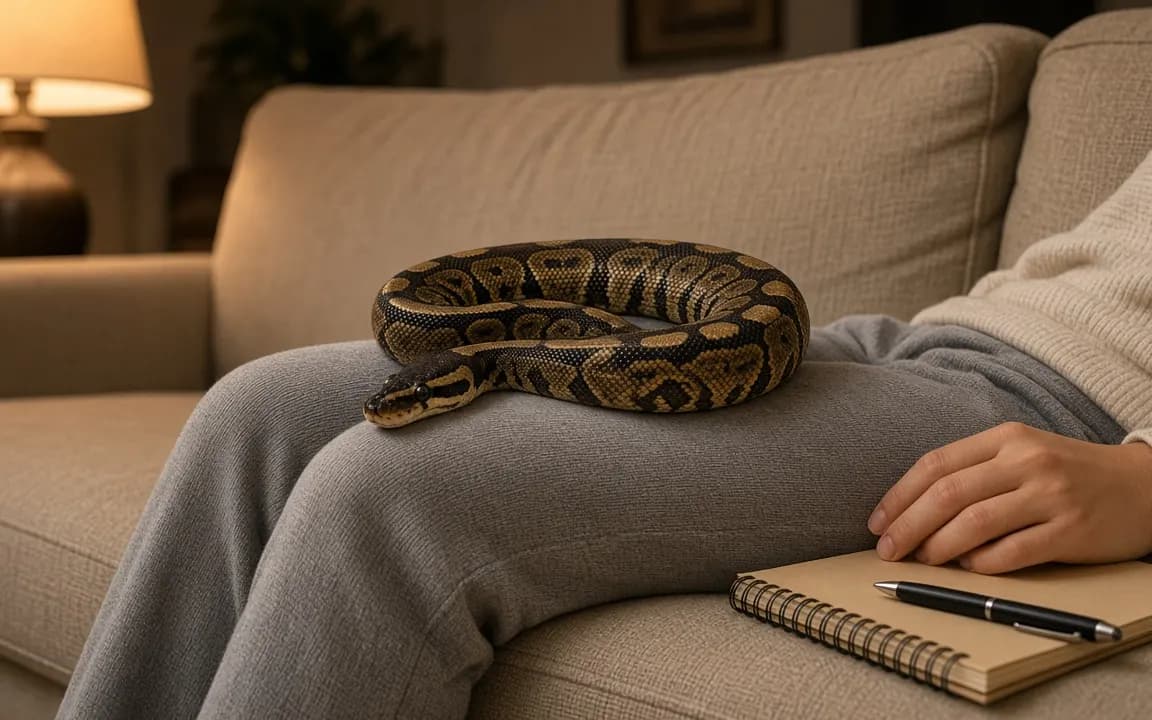
Because most pet crematory intake forms were written for cats and dogs. They ask for weight and maybe breed, and that's it. For a reptile, weight alone can be badly misleading: a 3 kg python is two meters of snake that has to fit through a chamber door, and a 3 kg tortoise is mostly bone.
Reptiles are a large and growing group of pets. The UK alone has about 600,000[1] pet snakes, yet a crematory might see only a handful in a year. The more clearly you describe your animal, the less guesswork happens on their side, and the less chance of a mix-up, a surprise charge or a missed wish. Across the whole sector, though, reptile deaths are not rare. By our estimate, if US reptile households each took on one new reptile a year, around 216,000 would die within that first year even at the low rate the University of Kent study found.[2] We rate that figure low confidence, but it shows why crematories should expect reptile calls.

The checklist
What should you tell them on the first call?
- Species, as precisely as you can. 'Ball python' is better than 'snake'; the scientific name is better still if you know it.
- Weight and length. Weigh on a kitchen or bathroom scale; for a snake, estimate the length from nose to tail tip.
- Venomous or not. Say it clearly, even if you think it's obvious from the name.
- How and when it died: naturally, by euthanasia, or of an illness a vet has named or suspected.
- Its current state: in a fridge, frozen, or at room temperature, and how it's wrapped.
- What you want back: ashes, a shell, a shed skin sent with the body, or nothing.
- Any paperwork, such as a microchip number or a certificate for a protected species.
That's the same information we ask for when you send us a request, so you only have to write it once. The cremation cost calculator uses the weight to show a realistic price range before you call anyone.

Free tool
Cremation cost calculator
Estimate a realistic price range for your pet's size, location and the type of cremation.
Venomous species
Why do you have to say if your snake or lizard was venomous?
Venom stays dangerous after death, and a dead snake's head can still bite by reflex for some time. Staff who unpack your animal need to know before they open the bag, not after. It also changes how they want it packed: head secured, ideally in a rigid, clearly labelled container.
The same applies to species that are only mildly venomous or rear-fanged, such as hognose snakes, and to Gila monsters and beaded lizards. When in doubt, say it. A crematory would much rather be told twice.
Health and cause of death
Does it matter how your reptile died?
Yes, for two reasons. First, safety: most reptiles carry Salmonella, which is why the US banned sales of small turtles in 1975, a rule the CDC's reptile guidance credits with preventing about 100,000 infections in children a year.[3] Staff will handle your animal with gloves regardless, but a named infection helps them take the right care.
Second, your other animals. Some reptile diseases, such as inclusion body disease in boas and pythons or adenovirus in bearded dragons, spread through collections. If there's any chance of that, ask your vet about a post-mortem before cremation. Exotic pets are a big part of that work: at the University of Tokyo's veterinary pathology service, exotics made up 20.5%[4] of post-mortem cases over 15 years.
If your reptile was euthanized, say so. It doesn't change the cremation itself, but it tells the crematory the body must not be released for anything other than cremation.
When your reptile seemed to have died, how sure were you at first?
Tap an answer to vote and see how others answered. Anonymous.
What you want back
How do you make sure your wishes are followed?
Put every wish in writing, including ones that feel minor. If you want a tortoise's shell kept, it has to be arranged before collection, because cremation turns it to ash; our guide to keeping a tortoise shell explains why. If you want a shed skin or a small toy cremated alongside your snake, say so, and ask whether it will be accepted.
Ask for written confirmation that the cremation is private, and how your reptile will be identified from collection to return. By one directory's count, only 2 states[5], Illinois and Arizona, required written documentation for pet cremation as of April 2026, and only 9 states[6] have pet-crematory-specific laws at all. In most places, a clear written agreement is your main protection. In the UK, the Competition and Markets Authority's final report now requires vet practices to set out communal, individual and add-on prices, so asking for everything in writing is normal.
Our list of questions to ask a reptile cremation provider goes further, including what a good answer sounds like.
Storage and transport
What should you say about how your reptile is being kept?
Tell them whether your reptile is refrigerated, frozen or neither, and how it's wrapped. A frozen large snake or tortoise may need time to thaw before cremation, which can change the schedule. A body that has been at room temperature for a day in summer may need to be collected sooner.
Also mention access: a large tortoise in a garden enclosure or a heavy python in an upstairs flat may need two people to carry. Our article on transport and logistics when a reptile dies covers containers, cooling and getting a big animal to the car safely.
If something was missed
What if you forgot to mention something?
Call as soon as you remember. If your reptile hasn't been cremated yet, almost anything can still be changed, including adding a shell request or cancelling a communal cremation in favor of a private one. Ask them to note the change on the paperwork and confirm by email.
If the cremation has already happened, ask exactly what was done and get it in writing. Mistakes are rare, but they're easier to put right when they're raised quickly and calmly. If you'd like help finding a provider who is used to reptiles in the first place, browse our reptile aftercare services or learn what happens during a reptile cremation. Our local pages show typical prices and rules where you live.

Reader polls
What would you choose?
Vote anonymously and see how other readers answered. The results are live counts from people who visit this site, so they show real opinions, not a scientific sample.
Which reptile are you planning aftercare for?
Tap an answer to vote and see how others answered. Anonymous.
When your reptile seemed to have died, how sure were you at first?
Tap an answer to vote and see how others answered. Anonymous.
Did you (or would you) compare more than one provider?
Tap an answer to vote and see how others answered. Anonymous.


Questions people ask
Do I need the scientific name of my reptile?
It helps but isn't required. A common name plus a photo is usually enough for a crematory to understand size and handling. The scientific name matters most for protected species, venomous animals and anything unusual, where two very different animals can share a nickname.
Should I tell the crematory if my reptile had Salmonella?
You can, but they'll assume it anyway, because most reptiles carry it without being ill. What matters more is any disease a vet diagnosed or suspected, especially one that could affect other animals. Cremation destroys bacteria and viruses, so there's no risk in the ashes themselves.
Can a crematory refuse a venomous snake?
Some do, particularly smaller pet crematories without staff experienced with venomous species. Others accept them if the animal is packed securely in a rigid, labelled container. That's why saying it on the first call matters: it saves you a wasted journey.
Do I need paperwork to cremate a protected tortoise?
For cremation itself, usually not. The paperwork matters if you want to sell, gift or move a protected species, alive or dead, including a shell. Keep any certificate you have, and mention it to the crematory in case they want to note the microchip or ring number.
What if I don't know my reptile's weight?
Use a kitchen scale for anything small, placing your reptile in a sealed bag in a bowl and subtracting the bowl. For a heavy tortoise, weigh yourself holding it and subtract your own weight. A rough figure is fine; just say it's an estimate.


Sources and our estimates
- [1] There are about 600,000 pet snakes in the UK (1.3% of households). UK Pet Food (formerly PFMA) Pet Population 2026, 2026.
- [2] If U.S. reptile-owning households each acquired one reptile a year and first-year mortality matched the UK study (3.6%), about 216,000 new pet reptiles would die within a year; the contested 75% figure would imply 4.5 million. Our estimate: 6,000,000 households x 1 reptile x 3.6%; vs x 75%. How we calculate.
- [3] Since 1975 it has been illegal in the U.S. to sell turtles with shells under 4 inches; CDC estimates the ban prevents about 100,000 Salmonella infections in children each year. U.S. CDC - Healthy Pets: Reptiles and Amphibians, 1975.
- [4] At the University of Tokyo, exotic animals made up 20.5% of necropsy cases in 2006-2020, and the median age at death of necropsied dogs rose from 2 years (1903-1914) to 10 years. Nakayama H et al. Chronological transition of necropsy cases of animals in Tokyo, Japan. J Vet Med Sci, 2023 (PMID 36385043), 2023.
- [5] As of April 2026 only Illinois and Arizona mandated written documentation to consumers for pet cremation. FindPetCremations - Pet Cremation Laws & Regulations by State (2026), 2026.
- [6] Nine US states have pet-crematory-specific licensing or consumer statutes: California, New York, Texas, Arizona, Virginia, Georgia, North Carolina, Maryland and Illinois. FindPetCremations - Pet Cremation Laws & Regulations by State (2026), 2026.
Send us your reptile's details once
Tell us what you need and where you are. We'll reply by email with clear options and prices so you can decide in your own time.