Arranging reptile aftercare in Hilo
From shed-skin keepsakes to tortoise shells, reptile aftercare in Hilo involves choices no other pet leaves you. Here's how cremation works locally and what it usually costs.
- Honest Hilo costs for small pets
- Shell and shed keepsakes planned early
- Local weather and brumation advice
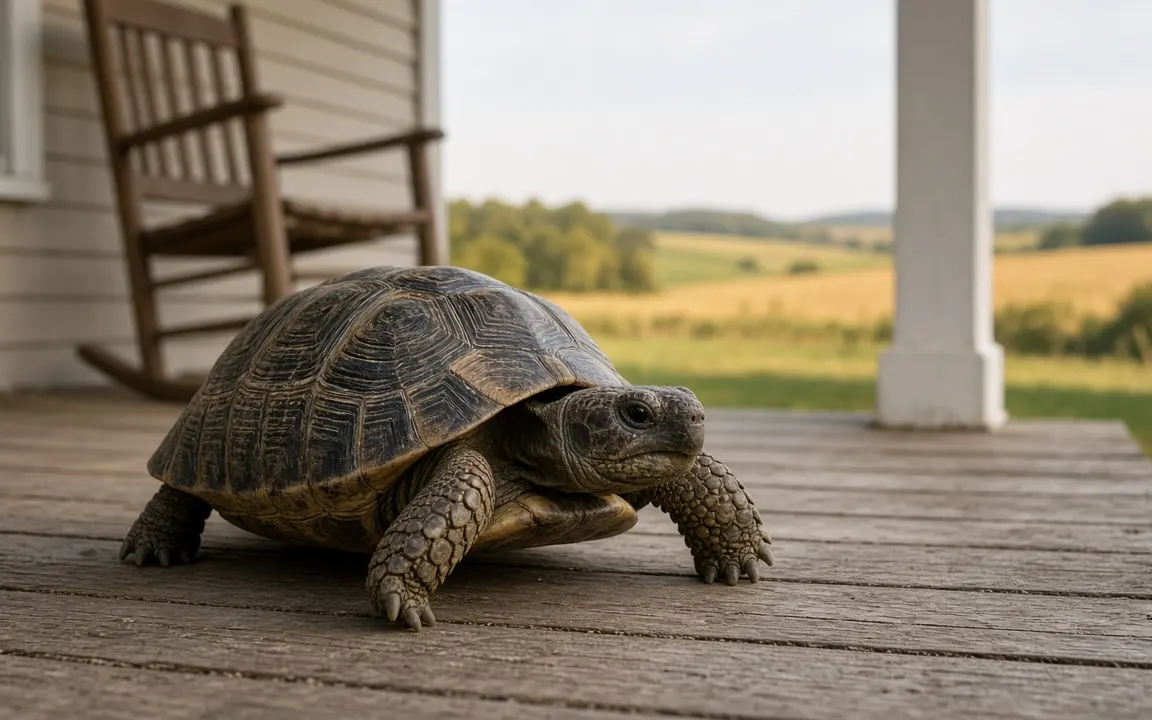
Hilo, Hawaii
Finding reptile-savvy help in Hilo
Pets in Hilo live with heavy rain, lush yards and plenty of outdoor time, and families here often keep cats, birds and small animals in open-air homes. When one dies, the absence is noticed on the lanai and in the garden. If you want a short goodbye outdoors before collection, a covered lanai works well on a wet afternoon. Take whatever time you need.
Hilo is one of the rainiest towns in the United States, with warm, humid days year-round, highs in the low 80s and nights rarely below the mid-60s. There is no cool season to slow things down after a pet dies. Pick the shadiest room, with a fan or air conditioning if you have it, rest your pet on a beach towel, and tuck a couple of ice packs in cloth beneath. Then reach out to a provider when you feel steady enough to talk.
Ashes from a crematory far from Hilo often come back by post or courier. For a reptile that's a tiny parcel, but it's worth asking how it's packed, whether it's tracked and whether someone must sign for it. If you'd rather not receive ashes in the mail, ask whether your vet can hold them for you instead.
Hilo's population is around 44,000, the 2nd-largest of the 4 Hawaii communities we cover.
Hilo sits within easy reach of Lahaina (130 miles). A provider based in any of them will usually collect from Hilo; ask what the mileage adds to the bill.
77.3%[1]
Hawaii had a 77.3% cremation rate in 2024, among the highest in the US.
6 million[2]
About 6 million US households keep reptiles.
700,000[3]
There are about 700,000 pet tortoises and turtles in the UK (1.6% of households).
3-5% of body weight[4]
Embrace notes cremated remains typically weigh about 3-5% of the pet's original body weight.
Sources for the statistics above: Embrace Pet Insurance and American Pet Products Association (APPA) 2025 National Pet Owners Survey release.
How Hawaii thinks about cremation
Cremation is the everyday choice in Hawaii: about 77.3%[1] of people who die there are cremated. That familiarity helps reptile keepers, because local crematories are well established and nobody needs to explain wanting ashes home. The gap is experience with unusual species, so the practical step is simply to ask how often a provider sees snakes, lizards and tortoises.
We take the Hawaii rate from Direct Cremate (citing CANA) (2024). It is a human statistic; there is no equivalent pet figure for Hilo, and we would rather show a real number than invent one.
Hilo weather and your reptile
Even without deep freezes, many reptiles in Hilo still slow down in the cooler months, and keepers often lower temperatures to mimic a winter rest. That seasonal quiet is exactly when brumation gets mistaken for death. If your reptile hasn't moved for days in winter, check with a vet before you do anything that can't be undone.
Hilo's climate is fairly mild, which gives you breathing room after a reptile dies. Once death is confirmed, a sealed tub in the fridge keeps a small reptile safely for a day or two while you decide between cremation and burial. There's no need to pay for a rushed collection unless your tortoise or snake is too big to store at home.
Reptile cremation prices in Hilo
In a US survey, 61% of owners said the cost of aftercare worried them[5]. For reptiles the numbers are usually modest, because most sit in the lowest band shown below. The simplest way to keep a Hilo quote honest is to give the species, the weight and, for snakes, the length, then ask for one written total.
Rather than repeat the price table on every city page, we keep one for Hawaii: Hawaii costs. What each service includes is on the services page.

Free tool
Cremation cost calculator
Estimate a realistic price range for your pet's size, location and the type of cremation.
What Hawaii allows for burial and ashes
The rules that matter most after a reptile dies usually concern land rather than cremation. Burying on property you don't own, or scattering in a park or waterway, can need permission in Hawaii. A small lizard leaves so little ash that many keepers skip scattering entirely and keep it at home, which avoids the question.
Not sure which office covers Hilo? The Hawaii local government directory is the official list.
For Hawaii's rules on burying a pet at home or scattering ashes, see the Hawaii guide. Local rules in Hilo can be stricter than the state's, especially in homeowners' associations and rentals.
What to do when your reptile dies in Hilo
- Tell your child simply and honestly that their gecko or turtle has died. Phrases like "gone to sleep" can make bedtime frightening.
- Let an adult do all the handling, wearing gloves. The CDC advises keeping children under five away from reptiles and their habitats because of Salmonella.
- Offer a way to say goodbye without touching: a picture they draw to go in the box, a few written words or a photo they love.
- Let them help choose whether the ashes come home or the pet is buried in the garden. What counts is that their opinion was wanted.
- Save something they can hold, perhaps a shed skin behind glass or a single scute inside a little locket.
- Wash hands together afterwards, then disinfect everything the reptile came into contact with before the tank gets a new occupant.
Honoring a long, quiet bond
Hilo is the largest town on the east side of Hawaii Island and the seat of Hawaii County, curving around Hilo Bay beneath the slopes of Mauna Kea and Mauna Loa. Homes range from older plantation-era houses near downtown to neighborhoods climbing into the rain forest above town. The island is large and aftercare options are fewer than on Oahu, so ask any provider where they are based and how far they will travel.
use the free tools before you ring anyone, or see how other readers answered in our polls, go deeper with the guides or catch up on recent articles, Compare every option on our services page. More local pages: Honolulu, Kailua and Lahaina, the Hawaii overview and every city in the United States.

Reader polls
What would you choose?
Vote anonymously and see how other readers answered. The results are live counts from people who visit this site, so they show real opinions, not a scientific sample.
Have you ever kept a shed skin, scute or photo of your reptile's markings as a keepsake?
Tap an answer to vote and see how others answered. Anonymous.
What did you do with the enclosure after your reptile died?
Tap an answer to vote and see how others answered. Anonymous.
If you had to decide today, which aftercare would you choose for your pet?
Tap an answer to vote and see how others answered. Anonymous.

Free tools to help you plan
Cremation cost calculator
Estimate a realistic price range for your pet's size, location and the type of cremation.

Ashes weight estimator
See roughly how much ash to expect back, by species and body weight.

Pet age & senior years calculator
Convert your pet's age and see when senior-care and planning conversations usually start.
Questions people ask
How do Hawaii attitudes to cremation compare?
Direct Cremate (citing CANA) (2024) puts the Hawaii human cremation rate at about 77.3%[1]. We show it on the Hilo page because pet aftercare choices tend to track it: where cremation is normal for people, communal and private pet cremation are both easy to find.
Does the Hilo climate change what I should do first?
Only the timing. In September, with highs near 83°F, cool the body and book collection the same day. Winters here are mild enough that burial or scattering is possible in any month.
Will a crematory near Hilo accept a snake?
Most pet crematories will cremate a snake, but experience varies. Give the species, weight and length when you call. A long python may need to be coiled into a container that fits the chamber door, and a few smaller operations have a size limit. Ask how often they handle snakes and whether the cremation is private.
Can I have my reptile freeze-dried instead of cremated in Hilo?
Yes, a few studios take reptiles, and some keepers like how well scales and markings survive. One Ohio studio lists a bearded dragon at about $850[7], and freeze-drying typically takes 6 to 12 months[8]. By our estimate it costs about six times an average cremation[9]. Keep the body frozen, not refrigerated, if you're considering it, and call the studio before anything else is arranged.
Is it safe to handle my reptile's body?
Yes, with basic hygiene. Reptiles often carry Salmonella, so wear disposable gloves, double-bag the body, keep it away from food and wash your hands for at least 20 seconds afterwards. Keep young children and anyone with a weakened immune system away. For venomous species, use tongs near the head, because a bite reflex can remain.
How much ash will I get back from my reptile?
Cremated remains weigh roughly 3-5% of body weight[4], so the amount follows size closely. A leopard gecko returns a gram or two, a bearded dragon about a tablespoon, a ball python a few ounces and a large tortoise several pounds. Shelled species return a little more because the shell is bone. The ashes weight estimator gives a figure for your pet.


Sources and our estimates
- [1] Hawaii had a 77.3% cremation rate in 2024, among the highest in the US. Direct Cremate (citing CANA), 2024.
- [2] About 6 million US households keep reptiles. American Pet Products Association (APPA) 2025 National Pet Owners Survey release, 2025.
- [3] There are about 700,000 pet tortoises and turtles in the UK (1.6% of households). UK Pet Food (formerly PFMA) Pet Population 2026, 2026.
- [4] Embrace notes cremated remains typically weigh about 3-5% of the pet's original body weight. Embrace Pet Insurance - Bury or Cremate Your Dog? Costs, Pros & Cons, 2025.
- [5] 61% of US owners in the Cooney survey rated the cost of after-death body care as a concern (27.9% concerned, 33.1% very concerned). Cooney, Kogan, Brooks, Ellis - Pet Owners' Expectations for Pet End-of-Life Support and After-Death Body Care, Topics in Companion Animal Medicine (2020), 2020.
- [6] The median price multiple of private (ashes returned) over communal cremation across 8 markets is about 2.0x, ranging from 1.25x (Tokyo) to 5.2x (Auckland). Our estimate: median(private_price / communal_price) same weight band: US CareCredit 51-70 lb midpoints (250/75) = 3.33x; Auckland 15-25 kg (445/85) = 5.24x; Norway 1-20 kg (3790/1190) = 3.18x; Singapore 10-20 kg (480/260) = 1.85x; Ontario 25-250 lb (549/279) = 1.97x; Tokyo 20-30 kg (38500/30800) = 1.25x; France 20 kg midpoints (200/95) = 2.11x; Germany range midpoints (270/145) = 1.86x. How we calculate.
- [7] Freeze-drying costs about $850 for a bearded dragon, $950 for a hedgehog, rat or ferret, and $650–$1,350 for a small bird at one Ohio studio. Animal Family Pet Preservation – Pricing, 2026.
- [8] Both traditional taxidermy and freeze-drying typically take 6–12 months, sometimes longer. Memorials.com – Pet Taxidermy Guide, 2025.
- [9] Freeze-drying a pet costs about 6 times as much as an average cremation. Our estimate: USD 1,500 (midpoint of USD 1,000–2,000) / USD 250. How we calculate.
Get Hilo prices for your snake, lizard or tortoise
Tell us what you need and where you are. We'll reply by email with clear options and prices so you can decide in your own time.