Reptile cremation in Ketchikan, from geckos to tortoises
Losing a reptile you've cared for over many years is hard, and people don't always understand. We explain the Ketchikan options plainly and can send prices from providers that accept reptiles.
- Tiny geckos to giant tortoises
- Straight answers on ash, shells and sheds
- No pressure, no rush
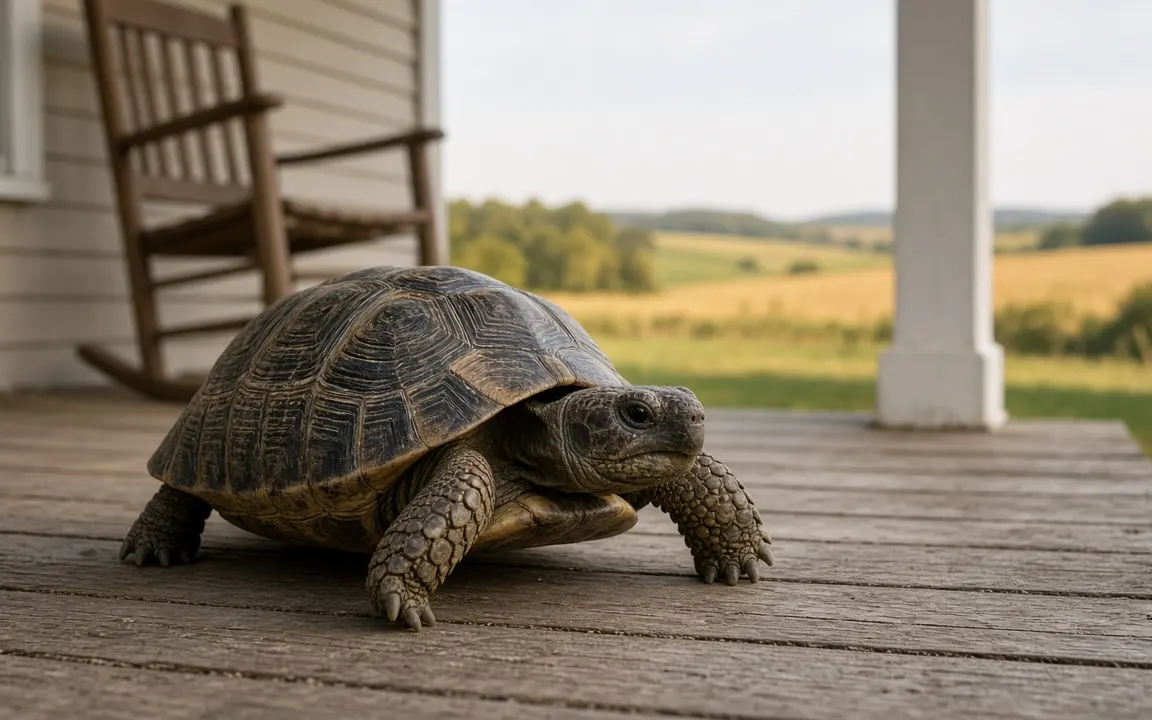
Ketchikan, Alaska
Where Ketchikan keepers turn for help
Ketchikan stretches along the Tongass Narrows on Revillagigedo Island, with homes built up steep hillsides and out along the waterfront roads. There is no road to the mainland, and even the airport sits across the channel on Gravina Island. For pet aftercare, that means fewer local choices and more planning. When you ask for options, mention you're in Ketchikan so any provider can explain how cremation off-island works and what it costs.
Ketchikan is one of the rainiest towns in the country, with frequent heavy storms but mild temperatures and little lasting frost. Home burial is often possible year-round, though steep, rocky lots and saturated soil make digging a real job. Pick a spot well above any creek, dig deeper than you think you need, and cover the grave with heavy stones, since bears come into town during salmon season.
Rural gardens around Ketchikan see more wildlife, and a buried reptile can draw foxes, raccoons or badgers. Choose a spot you can cover with a paving slab or a heavy stone, away from where pets and livestock roam. If the ground is rocky or often waterlogged, cremating first and burying the ashes is simpler.
With roughly 7,939 residents, Ketchikan is the 6th-largest of the 10 Alaska communities we cover.
74.1%[1]
The NFDA projected Alaska's cremation rate at 74.1% for 2024.
6 million[2]
About 6 million US households keep reptiles.
700,000[3]
There are about 700,000 pet tortoises and turtles in the UK (1.6% of households).
3-5% of body weight[4]
Embrace notes cremated remains typically weigh about 3-5% of the pet's original body weight.
To check the figures yourself, see UK Pet Food (formerly PFMA) Pet Population 2026 and Embrace Pet Insurance.
Cremation habits in Alaska and your reptile
Roughly 74.1%[1] of deaths in Alaska end in cremation, so many families already have an urn or two at home. That shapes what keepers here tend to do: a reptile's ashes often join a shelf of family keepsakes rather than a garden plot. If that's your plan, a small container that matches the others looks more settled than a separate display.
NFDA 2024 Cremation & Burial Report state projections (via Occasional Sage) (2024) is where the Alaska figure comes from. It counts people; we use it because attitudes to cremating a pet in Ketchikan tend to follow attitudes to cremation generally.
Seasons, brumation and timing in Ketchikan
Wet weather is the main seasonal factor in Ketchikan, with October usually the wettest month. Waterlogged ground makes a home burial messier and less secure, so some keepers wait for a drier spell or choose cremation instead. If you're scattering or burying ashes, a dry, still day is simply easier and more peaceful.
Even without deep freezes, many reptiles in Ketchikan still slow down in the cooler months, and keepers often lower temperatures to mimic a winter rest. That seasonal quiet is exactly when brumation gets mistaken for death. If your reptile hasn't moved for days in winter, check with a vet before you do anything that can't be undone.
Reptile cremation prices in Ketchikan
Expect Ketchikan prices to follow size, but only at the top end. Geckos, dragons, corn snakes and box turtles all sit in the lowest band; a big sulcata tortoise or Burmese python is priced like a large dog, and CareCredit's over-90 lb band reaches $350 to $450 for private cremation[5]. Collection, a keepsake urn and a certificate are often extra.
Prices for Ketchikan track the wider Alaska market, so use the Alaska price table as your baseline and the services page to see what is included.

Free tool
Cremation cost calculator
Estimate a realistic price range for your pet's size, location and the type of cremation.
Before you bury or scatter in Alaska
Rules on pet burial and ashes are set locally, and Alaska is no exception. For reptiles, one extra point matters: never bury one in a pot you'll bring indoors or near a vegetable bed, because Salmonella can linger in soil. Beyond that, the general rules for pets in your area apply.
Alaska keeps an official directory of local governments; use it to reach the county or city office that covers Ketchikan.
Start with the Alaska rules, which cover burial, scattering and oversight for the whole state, and treat Ketchikan's local ordinances as a possible extra layer.
Who to call and what to do, in order
- Book the final appointment with a vet who treats reptiles regularly, and ask whether they sedate first. Most reptiles are given an injection to sleep before the final one.
- Settle the aftercare before the day, because the consulting room is no place to weigh up options. Let the clinic know in advance if you'd like a private cremation with the ashes coming back.
- Pack a familiar hide or towel so the carrier smells like home, and on a cold day add a heat pack wrapped in cloth for the trip.
- Ask the vet to confirm death with a Doppler before you leave, because a reptile's heart can go on beating slowly for a while after the injection.
- Decide whether to stay in the room. Some keepers stay to the end, some say goodbye first, and neither is less loving.
- Read the cremation form before signing, checking private or communal and writing down any request about a shell, shed or keepsake.
- Pay ahead if the clinic allows it, and the goodbye won't end at the reception desk.
Honoring a long, quiet bond
Salmon streams, cruise-ship summers and quiet, wet winters give Ketchikan a rhythm that pet owners know well. Plenty of local pets know the harbor floats and the forest trails above town better than any yard. When families here think about ashes, the water is often the first place that comes to mind. If you plan a scattering from a boat, choose a calm day and keep a small amount aside if you want a keepsake.
use the free tools before you ring anyone, go deeper with the guides or catch up on recent articles, or compare your instinct with the poll results, Our services overview lays out every option side by side. You can also browse every city in the United States. Nearby, we also cover Anchorage, Kenai, Sitka and Wasilla, and every city in Alaska.

Reader polls
What would you choose?
Vote anonymously and see how other readers answered. The results are live counts from people who visit this site, so they show real opinions, not a scientific sample.
If your tortoise or turtle died, what would you want done with the shell?
Tap an answer to vote and see how others answered. Anonymous.
When your reptile seemed to have died, how sure were you at first?
Tap an answer to vote and see how others answered. Anonymous.
If you had to decide today, which aftercare would you choose for your pet?
Tap an answer to vote and see how others answered. Anonymous.

Free tools to help you plan
Cremation cost calculator
Estimate a realistic price range for your pet's size, location and the type of cremation.
Ashes weight estimator
See roughly how much ash to expect back, by species and body weight.

Pet age & senior years calculator
Convert your pet's age and see when senior-care and planning conversations usually start.
Questions people ask
Does the Ketchikan climate change what I should do first?
Only the timing. In August, with highs near 65°F, cool the body and book collection the same day. In January and February, when lows sit below freezing, a home burial may have to wait for a thaw, so cremation with ashes returned keeps your options open.
Why does the Ketchikan page quote a human cremation rate?
Because it is the best local signal we have. NFDA 2024 Cremation & Burial Report state projections (via Occasional Sage) (2024) reports about 74.1%[1] of Alaska residents are cremated. There is no official pet equivalent, and inventing one would be worse than quoting a real, clearly labelled number.
Can any vet in Ketchikan confirm my reptile has died?
Yes. Any vet can confirm death, even one that mostly sees cats and dogs, though a reptile or exotics vet is more used to it. The most reliable check uses a Doppler probe to listen for a very slow heartbeat. Call ahead, mention the species, and keep your reptile at its normal temperature until you get there.
Can I keep my reptile's shed skin as a keepsake?
Yes, and many keepers do. A clean, complete shed shows every scale and marking. Handle it with gloves, let it dry fully and store it flat in a sealed frame or display box away from damp. Turtles that shed their scutes leave small translucent plates that fit neatly in a locket.
My reptile died within its first year. Is that common?
It's less common than some claims suggest. A peer-reviewed University of Kent survey found only 3.6%[7] of pet snakes, chelonians and lizards died within their first year, though rates varied by species, with chameleons highest. If your reptile died young, a vet can help you understand why, which may protect any others you keep.
Is it safe to handle my reptile's body?
Yes, with basic hygiene. Reptiles often carry Salmonella, so wear disposable gloves, double-bag the body, keep it away from food and wash your hands for at least 20 seconds afterwards. Keep young children and anyone with a weakened immune system away. For venomous species, use tongs near the head, because a bite reflex can remain.


Sources and our estimates
- [1] The NFDA projected Alaska's cremation rate at 74.1% for 2024. NFDA 2024 Cremation & Burial Report state projections (via Occasional Sage), 2024.
- [2] About 6 million US households keep reptiles. American Pet Products Association (APPA) 2025 National Pet Owners Survey release, 2025.
- [3] There are about 700,000 pet tortoises and turtles in the UK (1.6% of households). UK Pet Food (formerly PFMA) Pet Population 2026, 2026.
- [4] Embrace notes cremated remains typically weigh about 3-5% of the pet's original body weight. Embrace Pet Insurance - Bury or Cremate Your Dog? Costs, Pros & Cons, 2025.
- [5] CareCredit lists US communal cremation at $150-$200 and private at $350-$450 for pets over 90 lb. CareCredit (Synchrony) - How Much Does Pet Cremation Cost? (Sept 2023), 2023.
- [6] If U.S. reptile-owning households each acquired one reptile a year and first-year mortality matched the UK study (3.6%), about 216,000 new pet reptiles would die within a year; the contested 75% figure would imply 4.5 million. Our estimate: 6,000,000 households x 1 reptile x 3.6%; vs x 75%. How we calculate.
- [7] A University of Kent survey found only 3.6% of pet snakes, chelonians and lizards died within one year of acquisition; boas and pythons had the lowest mortality (1.9%) and chameleons the highest (28.2%). Robinson JE, St John FA, Griffiths RA, Roberts DL. Captive Reptile Mortality Rates in the Home and Implications for the Wildlife Trade. PLoS One, 2015 (PMID 26556237), 2015.
Get Ketchikan prices for your snake, lizard or tortoise
Tell us what you need and where you are. We'll reply by email with clear options and prices so you can decide in your own time.